


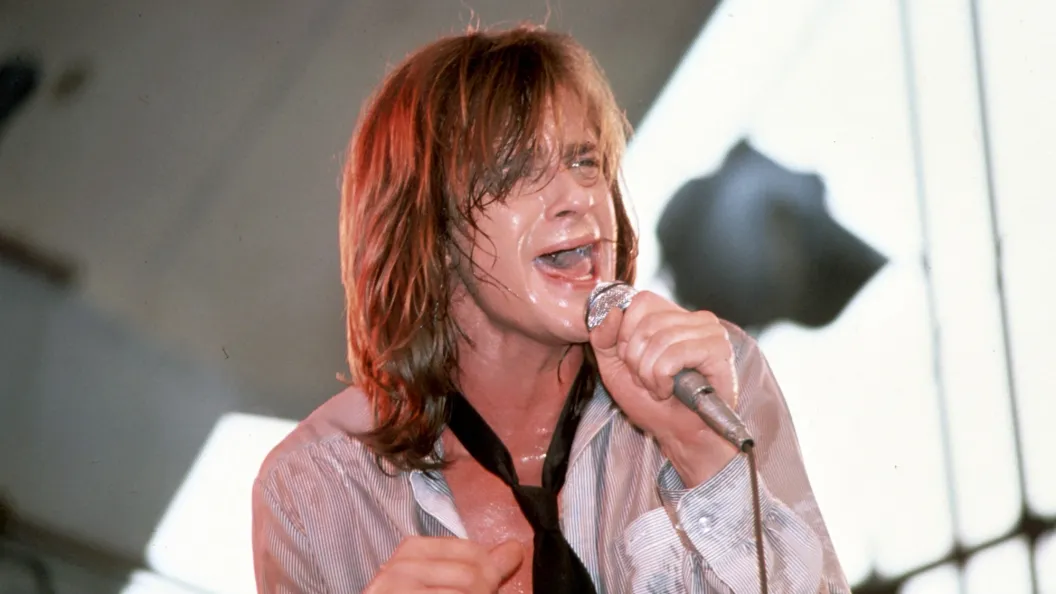
A run of hit singles that touches parts of three decades is quite impressive, no matter the artist. The fact that Eddie Money was able to make that success happen despite several mini-slumps in that stretch speaks to his resiliency as an artist.
Even in the early 90s, when the type of music that Money favored was no longer in style, he still managed to do damage on the pop charts. A final hit in 1991 demonstrated the staying power of his old-school charms.
The Man with ‘No Control’
Eddie Money didn’t really have an obvious gimmick to grab attention at the start of his career. Maybe you could count the fact that he was once an NYPD cop as something that set him apart. But that wasn’t the kind of thing that a lot of people knew once songs like “Baby Hold On” and “Two Tickets To Paradise” became part of the cultural fabric.
Money didn’t necessarily make things easy on himself in his heyday with his excessive use of drugs and alcohol. (He cleaned up in the latter part of the 80s.) His creative output was also hindered by the fact that he toured so excessively behind his hit albums. Those commitments meant that he didn’t always have the time to pull enough material together for the follow-ups.
Yet time and again, Money rose from the depths. For example, there was No Control in 1982, a bounce-back from two mostly hits-free records. He also struck gold in 1986 with “Take Me Home Tonight”, a duet with Ronnie Spector that gave him his first-ever Top 10 single. You just couldn’t ever count Money out, which was a good thing for a music scene short on genuinely ingratiating characters like him.
Taking Back the Reins
In the second half of the 80s, Money, like many other veteran rockers in the same boat, acquiesced to the demands of his label to accept material from outside writers. As competitive as the music scene was at the time, getting material from hitmakers like Diane Warren with winning formulas was the safe move.
But Money eventually started to chafe against doing those cover songs. After all, he’d had a hand in writing his early hits, and he thought he could do it again. Also, he wanted the musicians in his own band to make more of an impact on the material than hired session players offered by the record company.
That was the thought process with which he went into the 1991 album Right Here. Sure enough, he did co-write eight of the ten songs. As for the session musicians, well, he might not have had as much success on that front, as the instrumental credits are a mile long. Nonetheless, Money pulled it together for one more hit single that played off his knack for soulfully delivering relatable material.
A Bluesy Ballad
Money co-wrote “I’ll Get By” with Antonina Amato and Andy Hill. It’s a ballad with a climbing melody. And it casts Money as a heartbroken fellow who, against all evidence to the contrary, insists that he can survive a tough breakup.
In a nice touch, Money dedicated the video to Bill Graham, the legendary rock promoter who had recently passed away. Graham had championed Money in the early days, helping him get his record deal.
Despite the song being released into a music scene dominated by the nihilistic tendencies of grunge, “I’ll Get By”, which wore its heart out way out on its sleeve, connected on the radio. The song landed at No. 21 on the US pop charts. It was the last of Eddie Money’s Top 40 hits, just one more example of him rising to the occasion at a time when everyone counted him out.
(Photo by Images/Getty Images)
The post Eddie Money’s Last Top 40 Hit From 1991 Benefited From His Old-School Skills appeared first on American Songwriter.
Go To Source | Author: Jim Beviglia
These 3 Debut Country Singles From 1991 Went All the Way to No. 1 »