


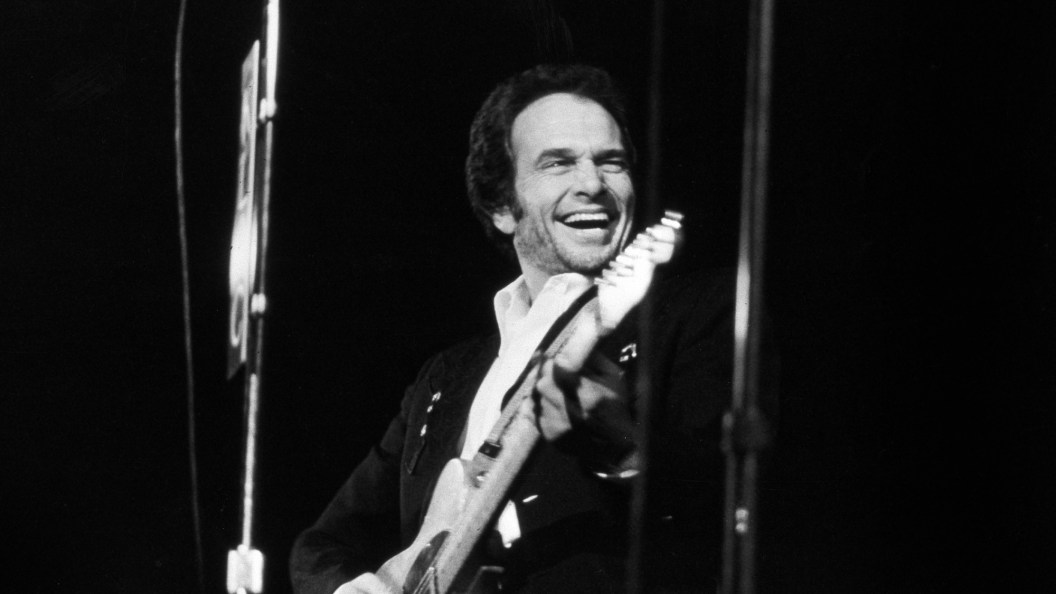
In the second week of October of 1970, Merle Haggard started a seven-week run at No. 1 with The Fightin’ Side of Me. He recorded the album during a show in Philadelphia in February that year. At the time, a studio recording of the album’s title track was on its way to the top of the country chart, where it would spend three weeks. The LP hit shelves in July and almost immediately started its ascent to the top.
“The Fightin’ Side of Me,” “Okie from Muskogee,” and their respective albums are forever linked. On the surface, they are two of Haggard’s biggest hits. They also helped shape his image. When “Okie” became a hit, many believed he was a staunch right-winger. He followed it with “The Fightin’ Side of Me” and solidified the belief.
At the same time, the albums were built using the same general blueprint. Haggard released a studio version of “Okie” in 1969. When it became a huge hit, Capitol released a live album of the same name. In early 1970, he released “The Fightin’ Side of Me.” It climbed the chart, and Haggard and Capitol repeated the process. It worked well. Haggard had two back-to-back No. 1 live albums supported by two consecutive No. 1 singles.
Does It Really Matter Where Merle Haggard Stood?
“The Fightin’ Side of Me” and “Okie from Muskogee” painted Merle Haggard as a hippie-hating, war-supporting, right-wing patriot. Based on conflicting quotes from interviews over the years, fans have debated whether the picture those songs painted was accurate or not. More than fifty years later, it’s hard not to wonder if it really matters.
At the end of the day, it doesn’t matter if “Okie” was a character study or written as satire. Whether he was as angry at hippies as he sounded in “Fightin’ Side” is kind of irrelevant. What is unquestionable is that Haggard tapped into a large section of the blue-collar American audience. They heard him saying all the things they felt. Those songs echoed their beliefs. As a result, they didn’t need him to stand firmly on what he was singing. They just needed to hear the words and feel like someone understood them.
It is interesting to note that Merle Haggard wanted to follow “Okie” with a song called “Irma Jackson.” The song is about a white man and a Black woman who fall in love but can’t be together due to societal racism.
Ken Nelson at Capitol Records told Haggard that the country music world wasn’t ready for a song about interracial love. After all, the Supreme Court had federally legalized interracial marriage just three years earlier, with the landmark Loving v. Virginia ruling. Instead, he pushed Haggard to release “Fightin’ Side” because it was more likely to extend the wave of success he was enjoying after “Okie” became a hit.
Featured Image by Michael Ochs Archives/Getty Images
The post 56 Years Ago, Merle Haggard Was a No. 1 with a Live Album That Reflected the Beliefs of His Fans appeared first on American Songwriter.
Author: Clayton Edwards
« 3 Songs From 1985 That Feel Like a Warm Sunday Morning
Ella Langley Cancels Show, Cites ‘Serious Security Threat.’ »