


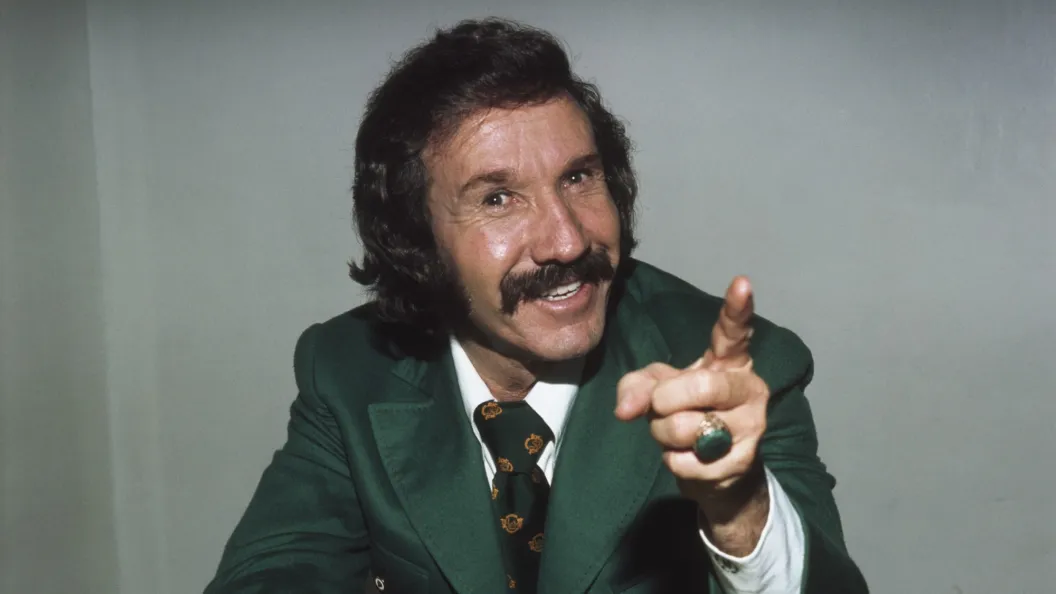
On this day (June 24) in 1976, Marty Robbins was at the top of the Hot Country Songs chart with “El Paso City,” the sequel to his 1959 hit “El Paso.” It wasn’t the first time Robbins revisited the sad tale of the lovesick gunfighter, though. A decade earlier, he recorded “Feleena (From El Paso),” which told the story of the gunfighter’s love interest. This was also his first trip to No. 1 in six years. His last chart-topper was “My Woman, My Woman, My Wife” in 1970.
Robbins released what is arguably one of the best Western ballads of all time with “El Paso.” So, it comes as no surprise that he wanted to revisit the story and expand on the world he built with the 1959 hit. The second entry in the series returns to the events of the first song while telling the story of Feleena. Then, with the third installment, Robbins moved into the future.
The world of “El Paso” is soaked with blood. First, the gunfighter killed a cowboy out of jealousy. Then, some time later, he was gunned down by a posse. In “Feleena (From El Paso),” we learn that his love interest ended her own life after he spent his final moments in her arms. In “El Paso City,” a modern man looks down at West Texas from a commercial jet. The landscape reminds him of a song he once heard and the sad end of its protagonist. By the end of the song, he is wondering if he’s the reincarnation of the gunfighter.
Marty Robbins Put Himself in the Narrator’s Shoes
Marty Robbins wrote “El Paso City” at least partially from experience. He reportedly penned the song while in an airplane flying over West Texas and the Badlands of New Mexico. The song seemingly wrote itself, pouring out of him in roughly the same time it took him to sing it: just over four minutes.
The landscape reminds the narrator of a song he heard long ago, which sparks his questions of reincarnation. On the other hand, it would be easy to imagine that Robbins was reminded of “El Paso” as he flew over that region of the Lone Star State. It was, after all, his signature song and one of his biggest hits.
Featured Image by George Wilkes/Hulton Archive/Getty Images
The post On This Day in 1976, Marty Robbins Was at No. 1 With the Sequel to One of the Greatest Western Ballads of All Time appeared first on American Songwriter.
Author: Clayton Edwards
« 3 Pop Songs From the 1980s That Will Get Your Friends Dancing