


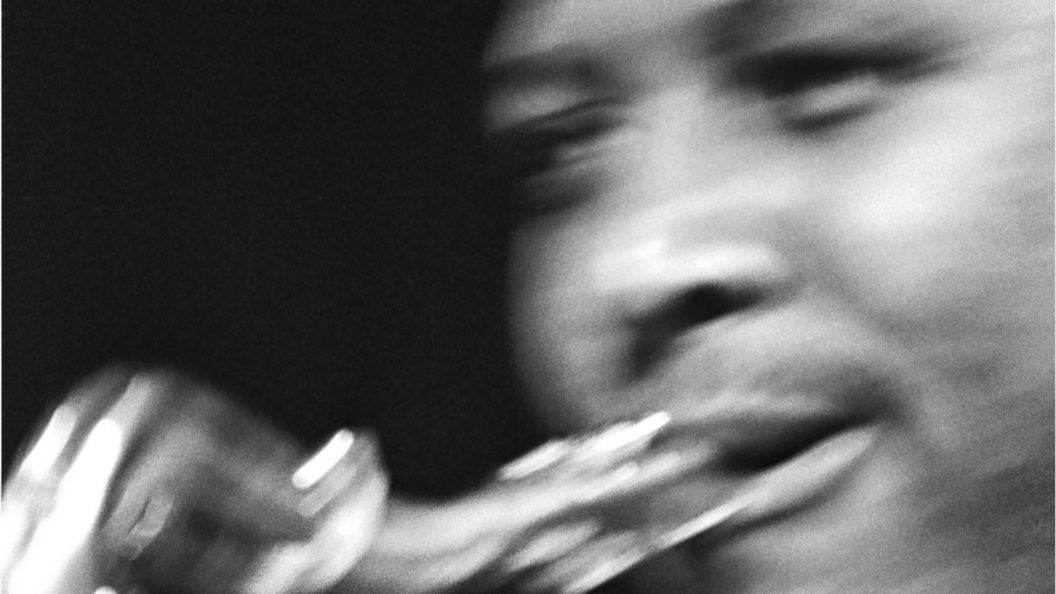
On this day (November 21) in 1941, tenor saxophonist Andrew Love was born to a Baptist preacher in Memphis, Tennessee. Alongside trumpet player Wayne Jackson, Love formed the Memphis Horns, bringing their soulful sound to hundreds of records by Aretha Franklin, Wilson Picket, Elvis Presley, Isaac Hayes, U2, Neil Young, Otis Redding, and Dusty Springfield.
Throughout their lengthy tenure, the Memphis Horns played on 30 Grammy-winning songs, 52 No. 1 hits, and 113 Top 10 singles. In February 2012, they became just the second group of backing musicians ever to win a Lifetime Achievement Award at the Grammys. (The Funk Brothers first accomplished this feat in 2004.)
Andrew Love retired from music in 2003, a year after being diagnosed with Alzheimer’s disease. He died at his Memphis home on April 12, 2012, at age 70.
Today, we’re taking a trip through his remarkable life and legacy in honor of what would have been his 85th birthday.
Andrew Love Was a Linchpin of Stax Records
Founded in Memphis in 1957 as Satellite Records before changing its name in 1961, Stax Records grew into one of the most influential soul music record labels of all time.
It helped give rise to icons including Otis Redding, Isaac Hayes, Booker T. & the M.G.’s, the Staple Singers, Sam & Dave, Rufus and Carla Thomas, The Bar-Kays, and dozens more.
At the heart of it all were Andrew Love and Wayne Jackson as the Memphis Horns, longtime co-owner Al Bell said.
“Stax Records would not have become what it became without them,” Stax co-owner Al Bell told the Los Angeles Times after Love’s death. “I love saxophone players, and I have many saxophone players I admire and hold in high esteem. But I have never heard a saxophone player who affects and penetrates me like Andrew Love. It was the spirit in him, and you could feel it in the music. He could arouse your deepest emotions, but he would do it gently, softly. It was like he was making love to your soul.”
Who Was He?
Andrew Maurice Love grew up immersed in the vibrant sounds of the Memphis soul scene. He got his start singing in the choir at the Baptist church where his father was a minister and his mother played the organ.
However, Love soon realized his interests lie in playing an instrument rather than singing. Receiving his first saxophone at age 14, he first performed publicly playing “Amazing Grace” at his father’s church. Within a year, he had become a fixture on the Memphis nightclub scene.
The Memphis Horns
Andrew Love’s saxophone skills earned him a music scholarship to Langston University in Oklahoma. However, he soon returned to Memphis and found session work at Willie Mitchell’s Hi Records.
Before long, Love met trumpet player Wayne Jackson, who did session work for Stax Records across town. Finding that they gelled musically, Love eventually left Hi Records for Stax.
There, they played every Stax record that featured a horn section over the next few years.
In addition to their work at Stax, the Memphis Horns often freelanced at Hi Records and Muscle Shoals.
A sampling of their discography includes Otis Redding’s “I’ve Been Loving You Too Long” (1965), “Try A Little Tenderness” and “(Sittin’ On) the Dock of the Bay” (both 1967); Wilson Pickett’s “In The Midnight Hour” (1965), Percy Sledge’s “When A Man Loves A Woman” (1966); and Aretha Franklin’s “I Never Loved A Man”, “Natural Woman”, “Respect” (all 1967) and “Think” (1968).
The duo even veered into rock music, playing with Peter Gabriel, U2, Steve Winwood, B.B. King, Bonnie Raitt, and Sting.
[RELATED: Remember When Otis Redding Recorded His Signature Song Shortly Before His Death in 1967?]
They also toured with the Doobie Brothers, Jimmy Buffett, and more.
Featured image by Sulfiati Magnuson/Getty Images
The post Born 85 Years Ago Today in Tennessee, the Saxophonist Who Helped Define the Sound of Memphis Soul and Played With Elvis Presley and Otis Redding appeared first on American Songwriter.
Go To Source | Author: Erinn Callahan
« 3 Top 40 Hits From 1987 That Every 80s Kid Still Knows by Heart Today
Sammy Kershaw Responds to ‘Sellout’ Claims After CMA Awards »