


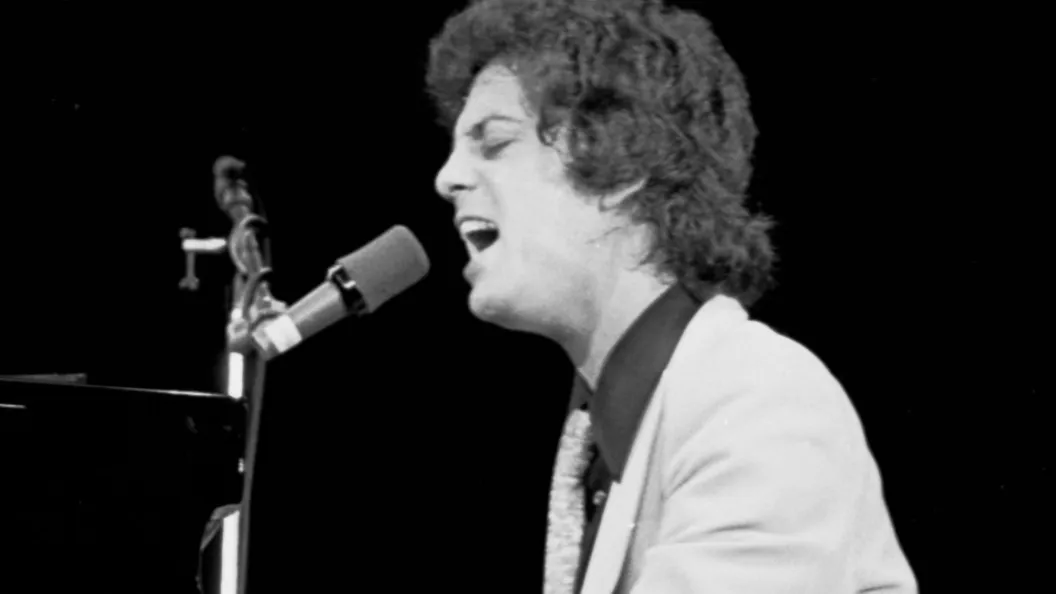
Billy Joel hit the sweet spot between singer-songwriter, rock and roll hero, and savvy pop star during his heyday. If you’re looking for the absolute apex of his career, start with the stretch of four albums he released between 1977 and 1982.
In that incredible streak of records, Joel ascended to peak after peak. These four albums stand tall in his imposing legacy.
‘The Stranger’
To be truthful, we could have made this a six-album stretch, and we still would have had nothing but gems involved. Turnstiles, though a commercial flop, preceded this stretch with some of Joel’s most affecting under-the-radar songs. An Innocent Man, which followed it, presented him at his crowd-pleasing best. The Stranger, an album to which he’d been building for a while, started it all. Producer Phil Ramone helped Joel and his band with their radio-friendliness. Joel also figured out how to streamline songs like “Only The Good Die Young” and “Movin’ Out (Anthony’s Song)” for maximum punch. Even the biggest swings, like “Scenes From An Italian Restaurant”, hit big-time.
’52nd Street’
52nd Street doubled down after the triumph of The Stranger, proving that Joel could repeat the formula now that he’d discovered it. But this record is by no means a simple rehash. Always aware of the way musical winds were blowing, Joel tapped into the studio finesse that was starting to envelop soft rock at the time, especially on the non-singles. As a result, 52nd Street doesn’t fall into the trap of being a few hit singles surrounded by filler. Songs like “Rosalinda’s Eyes” and “Stiletto” provide many musical surprises. As for the hits, you get Joel at his toughest (“Big Shot”), tenderest (“Honesty”), and most effortlessly hooky (“My Life”).
‘Glass Houses’
Many people point to the New Wave trappings as the defining characteristic of Joel’s 1980 album Glass Houses. Indeed, songs like “Sleeping With The Television On”, “All For Leyna”, and “Sometimes A Fantasy” leave no doubt that Joel was influenced by the skinny-tie group. But there’s a lyrical throughline as well. Most of Joel’s narrators find themselves trying to navigate modern romance with varying degrees of failure. Narratives like “I Don’t Want To Be Alone” and “You May Be Right” eloquently make their points, even if it does the protagonists no good. Bonus points go to this album for the inclusion of “Don’t Ask Me Why”, one of Joel’s most flawless singles.
‘The Nylon Curtain’
With his marriage on the rocks and the pressure of the rock-star life building on him, Joel went darker than ever before on The Nylon Curtain. Good luck finding any songs that offer solace on the record. Joel’s lyrics skew pitch-black on songs like “Laura” and “Pressure”. It also stands as one of the first records where he started looking outward and focusing on societal ills, doing so quite adeptly on gems like “Allentown” and “Goodnight Saigon”. All along the way, he and Phil Ramone dress up the melancholia and frustration in the most inventive music of his career. By the time Joel moans his way through the closer “Where’s The Orchestra?”, you’ve heard plenty of brilliance, if not much consolation.
(Photo by Bobby Bank/Getty Images)
The post Fantastic Four-Album Runs: Billy Joel From 1977 to 1982 appeared first on American Songwriter.
Go To Source | Author: Jim Beviglia
« Kid Rock’s Dinner With Donald Trump and Bill Maher Was ‘Epic’
Popular Indie Pop Band Escapes Tour Bus Fire on California Freeway »