


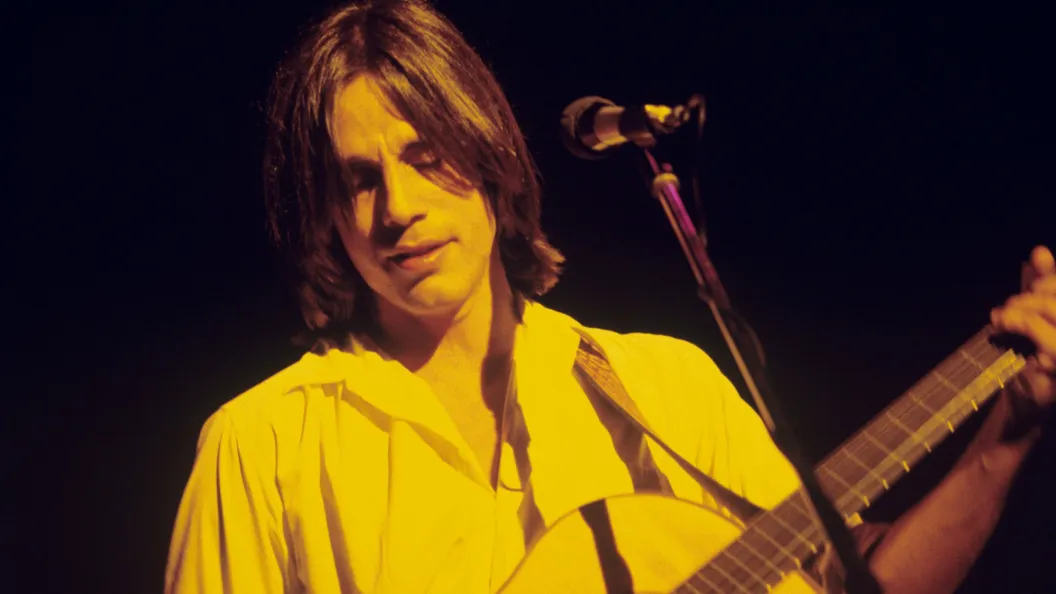
The work of Jackson Browne throughout the 70s established him as one of the premier singer-songwriters of his era. He proved time and again that he could write songs that were both personal and touched a nerve with those who experienced the same longing and loss.
But in 1980, Browne decided that it was time to crank up the noise a bit, at least relative to what he’d done before. And it resulted in a big hit for him, even if some critics lamented his new direction.
Sensing the Winds of Change
Jackson Browne’s professional career soared at about the same time as his personal life was dealing with great upheaval. In 1976, Browne’s wife, Phyllis Major, died by suicide. That year witnessed the release of The Pretender, Browne’s highest-selling album to that point.
The following year, Browne found a way to do a live album that didn’t sound like every other one in that genre. Recording not only on stage but also backstage, on buses, and in hotel rooms, he pumped life into a new set of originals to great acclaim. He titled the album Running On Empty after the hit single of the same name.
At that point, Browne likely looked around and realized that the singer-songwriter movement was starting to give way to a more rock-oriented sound in terms of what was hitting at the radio. Hearing bands like Fleetwood Mac and Eagles scoring with more of a hard-charging sound couldn’t help but influence his next go-round.
A New Record on “Hold”
Sometimes, it’s a good idea to leave fans waiting for a bit. Browne released Hold Out in 1980. That was nearly two-and-a-half years after Running On Empty had arrived, by far the longest stretch between records that Browne had ever taken and longer than usual for any music star of that era.
Browne immediately signaled what he was seeking with the first single. The first sounds you hear on “Boulevard” are fuzzed-out electric guitar, a far cry from the somber piano chords or plaintive acoustic guitar notes that usually distinguish Browne’s music.
“That Girl Could Sing” followed that up on the release schedule with moody minor keys and a crunching rhythm. This wasn’t the Jackson Browne of “Late For The Sky” or “Doctor My Eyes”. He cultivated the West Coast rock sound on those singles, dialing back the complexity of his lyrics slightly to accommodate it.
Happy Fans, Sad Critics
When you read the reviews of Hold Out that came out at the time, many of them complained about the change in tactics. Certainly, Jackson Browne was stepping out on a limb with the satire “Disco Apocalypse” and the spoken-word section in the elongated closer “Hold On Hold Out”.
That said, there’s no rule that every album has to reveal a dark night of the soul. Browne clearly didn’t mind that Hold Out didn’t dig quite as deep as his previous records. Instead, it rocked harder than he ever managed before, especially when it came to the singles.
On top of that, the public responded well to Browne’s new sound. Hold Out made it to the No. 1 spot on the album charts in 1980. That marked the first and only time that Browne ever occupied that rarefied air.
(Photo by Ebet Roberts/Redferns)
The post Remembering When a Jackson Browne Hit Album Angered the Critics but Thrilled the Fans in 1980 appeared first on American Songwriter.
Author: Jim Beviglia