


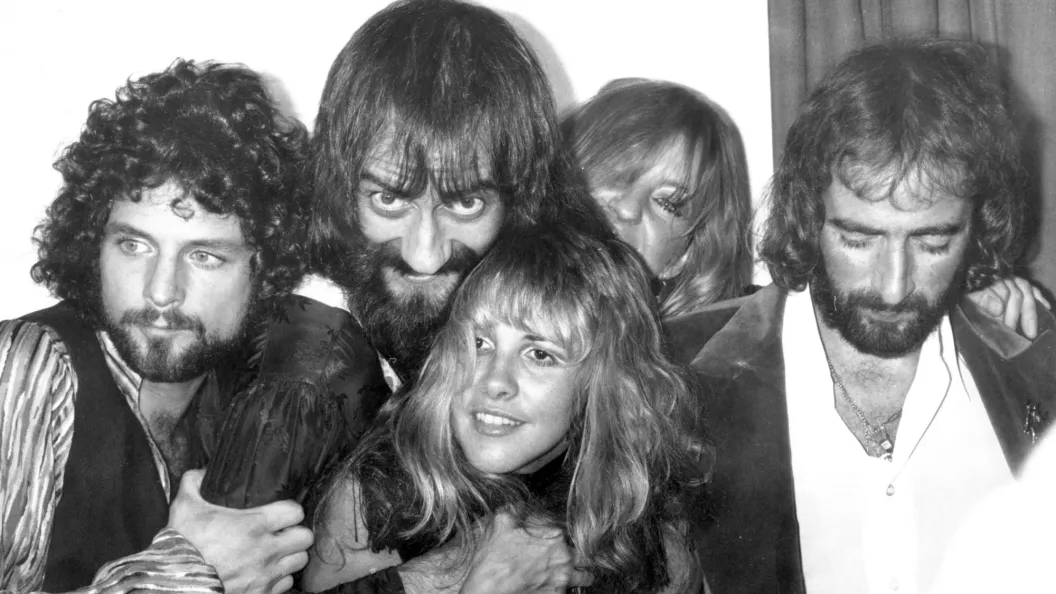
Sometimes, there doesn’t need to be a story behind an album. It’s enough for talented musicians to get together without a lot of drama behind the scenes and simply do what they do best.
That’s the pervading vibe attached to the 1982 Fleetwood Mac album Mirage. Free from some of the tumult that usually followed the band, the quintet delivered a no-frills, hit-laden set.
‘Tusk’ Hangover
It’s no surprise that Fleetwood Mac needed a break after the 1979 album Tusk and the subsequent worldwide tour to support it. By all accounts, the recording of the double LP had been a bit of a slog, characterized mostly by Lindsey Buckingham’s experiments in toying with the band’s pristine sonics.
By the time that they made Tusk, the romantic entanglements among the band members had mostly been doused. But that didn’t mean that things were harmonious within the group. Resentments over Buckingham’s dominance in the studio arose. On top of that, they’d been in close quarters for the better part of two years when the process was over.
Unsurprisingly, they took a break following the album cycle to work on other projects. Three of the five members made solo albums, with Stevie Nicks becoming a bona fide solo star via the 1981 LP Bella Donna. When the group reconvened to make their next Mac album, it was with a different mindset.
Easy, Lindsey
As the group’s founder and the closest thing it had to a leader, Mick Fleetwood made two decisions about the album that would be called Mirage when released in 1982. They’d get away from their native England to make it. And Lindsey Buckingham would have to dial back the overt production fussiness of Tusk.
While Buckingham wasn’t exactly overjoyed by the request, he agreed to it. The band set out for a French chateau that had been home to the creation of many other rock albums in 1981. They finished off Mirage in Los Angeles.
Unlike Rumours, the album didn’t have the undercurrent of band autobiography that supercharged those classic songs. And the ambition of Tusk was largely absent as well. Instead, Mirage came off as just another Fleetwood Mac album. Which, as it turned out, wasn’t a bad thing at all.
Moments of ‘Mirage’
By all accounts, relations remained mostly pleasant among Mac members while making Mirage. And although it might not come attached with some grand theme or hooky story behind its making, the LP sounds fantastic upon a fresh listen.
Christine McVie channels her effortless pop best on singles “Love In Store” and “Hold Me”. Buckingham’s twitchy energy rises to the fore on “Oh Diane” and “Can’t Go Back”. And Nicks comes through with the countryish “That’s Alright”, while her stunning “Gypsy”, embellished by Buckingham’s frenzied guitar arpeggios, is one of the best things the band ever did.
Even though the band was supposedly getting along well, or at least relatively well, during the making of Mirage, they didn’t seem too anxious to cling to each other. They played just a few live shows to support the record. And they didn’t reconvene for another album until Tango In The Night in 1987. By that time, the old band drama returned in a big way.
(Photo by Richard Creamer/Michael Ochs Archives/Getty Images)
The post Remembering When Fleetwood Mac Released a Hit Album Free of Their Usual Turbulence in 1982 appeared first on American Songwriter.
Author: Jim Beviglia
3 One-Hit Wonders That Became Rowdy Sports Stadium Anthems »