


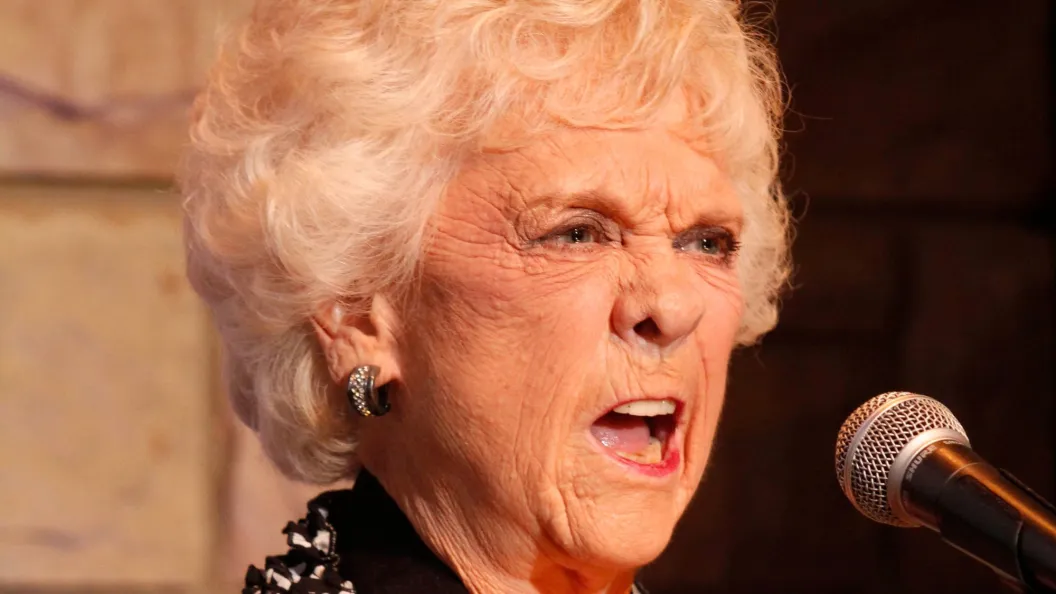
Country music left room for a very specific kind of woman in the 1950s and ’60s. Jean Shepard was not that kind of woman. However, she refused to shrink herself to the size of the space provided for her, instead carving out her own place in Nashville. With brash, unapologetically sassy songs like “Twice the Lovin’ (In Half the Time)”, Shepard wrote the manual for a new kind of female country star — one later utilized by artists like Loretta Lynn and Tammy Wynette.
On this day (September 25) in 2016, Jean Shepard died at age 82 in Gallatin, Tennessee of complications from Parkinson’s and heart disease. Today, we’re exploring her lasting legacy on the 10th anniversary of her death.
Jean Shepard Was a Grand Ole Opry Mainstay for Six Decades
On November 21, 1933, Ollie Imogene “Jean” Shepard was born to sharecropper parents in Pauls Valley, Oklahoma. She joined the Grand Ole Opry in 1955, continuing to perform there regularly for more than 60 years.
But the road to the bright lights of the Mother Church was hard-won. Following a path trod by many Oklahoma farmers during the Dust Bowl era, Shepard’s family moved to Visalia, California, in 1943. At school, she endured frequent teasing from classmates for being an “Okie” who listened to country music.
Undaunted, Shepard organized an all-female musical group called the Melody Ranch Girls with several high school classmates. She sang and played upright bass every weekend with the group. Shepard’s parents pawned furniture to buy her instrument.
“There’s Just No Place in Country Music for Women”
The Melody Ranch Girls went their separate ways when most of its members found husbands after high school — but not before they caught the attention of country star Hank Thompson, who promised to help Jean Shepard secure a recording contract after seeing her perform.
Thompson brought Shepard to Capitol Records A&R man Ken Nelson, but Nelson was hesitant to sign Shepard for exactly the reasons you would expect from a country music executive in the 1950s.
In a 2012 interview with the Guardian, Shepard recounted a backstage encounter with country music icon Hank Williams just before he played a show in Bakersfield, California.
“I was a young girl with big ambitions and I told him I was going to be a country singer. He said: ‘Oh yeah? Well, there ain’t much room in this business for a woman country singer,’” she recalled. “That was the general attitude back then, but it only made me more determined. Weren’t nothing going to stop me doing what I wanted to do, which was singing traditional country music the way it’s supposed to be sung.”
Certainly, the men’s reluctance didn’t stop Shepard from reaching number one with “A Dear John Letter”, which she recorded in 1953 with duet partner Ferlin Husky.
Not yet 20 years old, Shepard was the youngest woman at the time to ever land a number-one country hit. She held on to that record for nearly 20 years until 14-year-old Tanya Tucker topped the charts in 1973 with “What’s Your Mama’s Name”.
Making Her Own Name
Following the success of “A Dear John Letter”, Jean Shepard would show all her doubters that she didn’t need a man to record a hit song. She scored two top 10 hits in 1955 alone with “A Satisfied Mind” and “Beautiful Lies”/”I Thought of You”.
The following year, Shepard received her invitation to the Grand Ole Opry, joining Kitty Wells, Minnie Pearl and pianist Del Wood as the only female members at the time.
That’s where she met honky-tonk singer Harold “Hawkshank” Hawkins, and the two tied the knot in 1960. Tragically, their union was cut short just three years later when Hawkins died in the same plane crash that killed country crooner Patsy Cline.
After taking some time to grieve, Shepard returned in 1964 with the top-five hit “Second Fiddle (to an Old Guitar)”, her first charting single in five years.
[RELATED: Every Baby Boomer Alive Remembers These 4 Classic Country Jams From 1964]
She would continue placing at least one song on the U.S. country charts each year through 1978, with her final top 10 hit — the Bill Anderson–penned “Slippin’ Away” — coming in 1973.
At the time of her death 10 years ago, Jean Shepard was the longest-running member of the Grand Ole Opry.
Featured image by Ed Rode/Getty Images
The post A Decade Ago Today, We Said Goodbye to the Feisty Grand Ole Opry Matriarch Who Kicked Open Doors for Loretta Lynn and Tammy Wynette appeared first on American Songwriter.
Author: Erinn Callahan
« 4 Times Female Folk Singers Outdid Themselves Lyrically
3 Classic Singles From 1968 That Still Have a Fresh Sound Decades Later »