


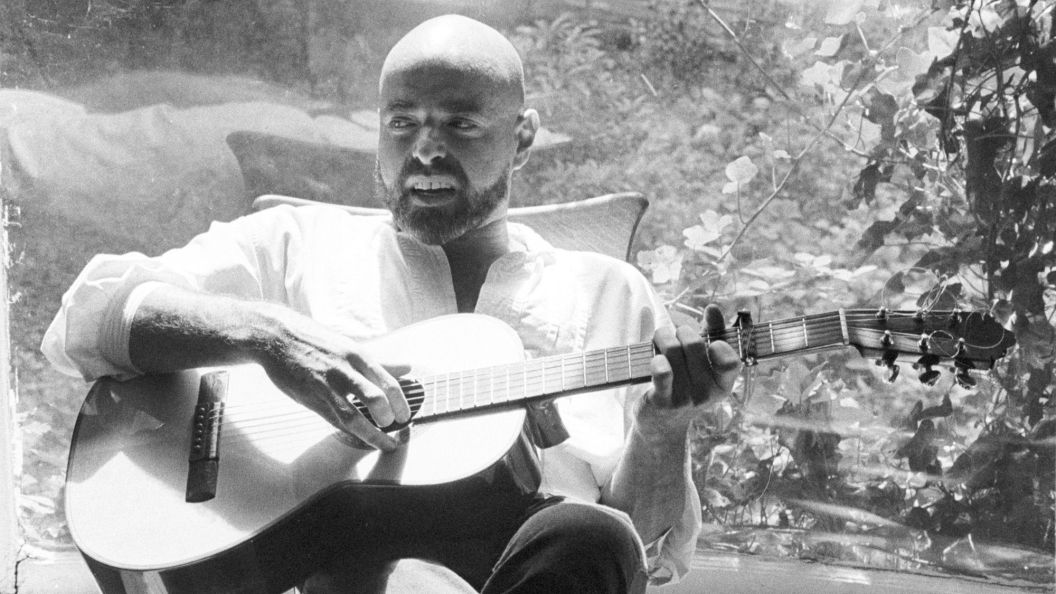
On this day (September 25) in 1930, poet, songwriter and all-around renaissance man Sheldon Allan “Shel” Silverstein was born in Chicago, Illinois. You might recognize him from his quirky children’s classics. Examples include A Light in the Attic, Where the Sidewalk Ends, and The Giving Tree. Less well known is Silverstein’s surprising connection to country music. Inducted posthumously into the Nashville Songwriters Hall of Fame in 2002, Johnny Cash’s 1969 novelty mega-hit “A Boy Named Sue” came solely from his pen.
Beyond that, Silverstein also gave us Tompall Glaser’s “Put Another Log on the Fire”. Other compositions include Loretta Lynn’s “Hey Loretta”, and “The Cover of ‘Rolling Stone’” by country-rock outfit Dr. Hook & the Medicine Show.
On May 10, 1999, Shel Silverstein died at age 68 of heart failure at his home in Key West, Florida. Today, we’re celebrating what would have been his 96th birthday with a trip through his unconventional career — from the glossy pages of Playboy magazine to kindergarten teachers’ classrooms.
Shel Silverstein Got His Start in the U.S. Army
Shel Silverstein’s earliest artistic inspiration was Li’l Abner creator Al Capp, whose work he began tracing at age seven.
While he would much rather have preferred his talents lie on the baseball diamond or attracting the opposite sex, it became clear early on that his strengths in fact lay in drawing and writing.
After graduating high school, he briefly attended first the University of Illinois, then the Chicago Academy of Fine Arts before being drafted into the U.S. Army.
While stationed in Japan and Korea, he first began attracting attention as a cartoonist for the military publication Stars & Stripes.
Traveling the World With Playboy
Returning to Chicago after his discharge, Shel Silverstein peddled ballpark hot dogs while also submitting his work to magazines such as Look, Sports Illustrated, and This Week. Eventually, he landed a more stable gig with Playboy.
Founded in 1953 by Hugh Hefner, the men’s lifestyle and entertainment magazine drew as much attention for its scantily clad photo spreads as it did for its incisive social and political commentary.
Silverstein’s cartoons — which appeared in every issue from 1957 through the mid-1970s — were a perfect fit.
His Outlaw-Country Connections
Following his artistic inclinations wherever they may lead, Shel Silverstein played and sang folk music in New York in the early 1960s.
While he didn’t quite have the vocal chops for a recording career, his writing skills were a different story. The Irish Rovers turned his song “The Unicorn” into a folk standard and a top 10 pop hit in 1968.
The following year, Johnny Cash soared with “A Boy Named Sue”, the lighthearted novelty hit rife with revenge, redemption, and repairing father-son bonds.
Silverstein recorded his own version, but it’s Cash’s rendition that has embedded itself into the public consciousness. It topped the U.S. country songs chart and nearly repeated the same feat on the pop charts, rising to number two.
After that, every artist in Nashville wanted a piece of Shel Silverstein. “A lot of people envied Shel, and a lot of the songwriters resented him,” close friend Bobby Bare told The Tennessean newspaper. “They envied that he was just dropping in with these brilliant songs, and getting them cut.”
Bare also scored numerous Silverstein-penned hits, including “The Mermaid” and “Tequila Sheila”.
[RELATED: 3 Shel Silverstein Songs That Became Surprising Country Hits]
Additionally, Silverstein co-wrote “A Long Time Ago” with outlaw country star Waylon Jennings.
Featured image by Alice Ochs/Michael Ochs Archives/Getty Images
The post Born 96 Years Ago Today in Chicago, the Offbeat Poet, Cartoonist, and Children’s Book Author Behind Johnny Cash’s Career-Defining Crossover Hit appeared first on American Songwriter.
Go To Source | Author: Erinn Callahan
« Every Baby Boomer Alive Remembers These 4 Must-Hear Classic Rock Ballads From 1967