


Walter Becker en Donald Fagan. Albums Aja, Pretzel Logic, Royal Scam.
Singers, songwriters, composers.
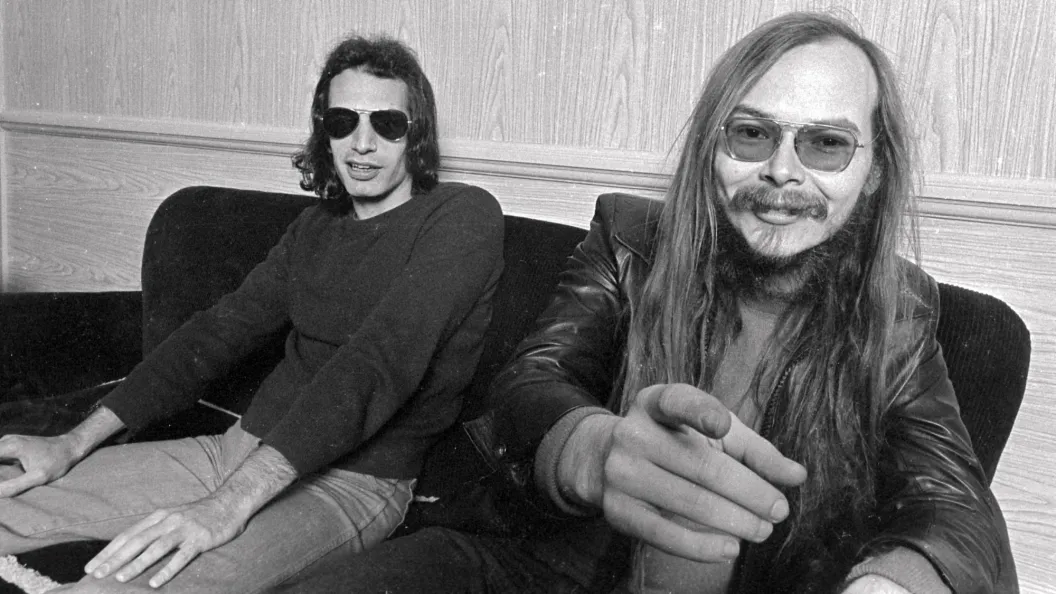
Music writers have spent a lot of time dissecting the complex arrangements concocted by Donald Fagen and Walter Becker for Steely Dan. The fascinating textures, which often went far beyond what you’d normally expect from rock-based music, made their songs and albums endlessly listenable.
But let’s not discount how the pair’s lyrics contributed to the overall effect. The pair possessed a knack for the unique lyrical twist that set their songs apart. On a 1977 classic, they mined the world of college football, of all places, to come up with an unforgettable refrain.
“Blues” in the Night
After working for over six months, traveling to multiple studios on both coasts, and employing dozens of session players, Donald Fagen and Walter Becker finally unleashed Aja in November 1977. The response to it was definitive from both critics and fans in agreement that it was Steely Dan’s masterwork.
Of the seven tracks on the album, “Deacon Blues” immediately emerged as a standout. The music certainly captures the “languid and bittersweet” feel described in the lyrics. At over seven minutes long, the song offers plenty of time for the instrumentalists to make their mark, especially saxophonist Pete Christlieb.
But even though the music is special, this is one Steely Dan song where the melody and lyrics take center stage. Fagen and Becker drew an indelible portrait of a great pretender whose golden dreams are forever eluding his grasp. And they came up with a brilliant couplet in the refrain to describe the magnitude of this poor sap’s failures.
A Boost from ‘Bama
After detailing his ideal outcome (expertise on saxophone before a booze-drenched death), the guy makes a demand. “They got a name for the winners in the world,” Fagen sings. “I want a name when I lose/They call Alabama the Crimson Tide/Call me Deacon Blues.”
If you’re not a sports fan, those last lines might baffle you. The University of Alabama’s sports teams come adorned with the nickname the Crimson Tide, a reference to the colors they wear. In an interview for the Marc Myers book Anatomy Of A Song, Fagen explained how he came up with the line:
“One day I had an idea for a chorus. If a college football team like the University of Alabama could have a grandiose name like the ‘Crimson Tide,’ the nerds and losers should be entitled to a grandiose name as well.”
Call the Deacon
Because of the high success rate of Alabama’s football team, many people readily understood what Fagen and Becker were suggesting with that line. But they might not have even realized that there’s another football reference in the second part of that comparison.
Although not huge football fans, Fagen and Becker had heard of Deacon Jones, a powerhouse defensive lineman who also dabbled in acting and singing. They liked the symmetry of “Crimson” and “Deacon.” That’s how this hapless character ended up dubbing himself “Deacon Blues”.
“Deacon Blues” still packs a wallop as one of rock’s ultimate character sketches, a piercing glance at someone whose pie-in-the-sky dreams consistently collide with his dour reality. Those gridiron references were essential in separating the triumphant from the tragic.
(Photo by BSR Agency/Gentle Look via Getty Images)
The post Remembering When a College Football Team Worked Its Way Into a Famous Steely Dan Song in 1977 appeared first on American Songwriter.
Author: Jim Beviglia
3 One-Hit Wonders From the 1970s That My Two-Year-Old Loves Dancing To »