


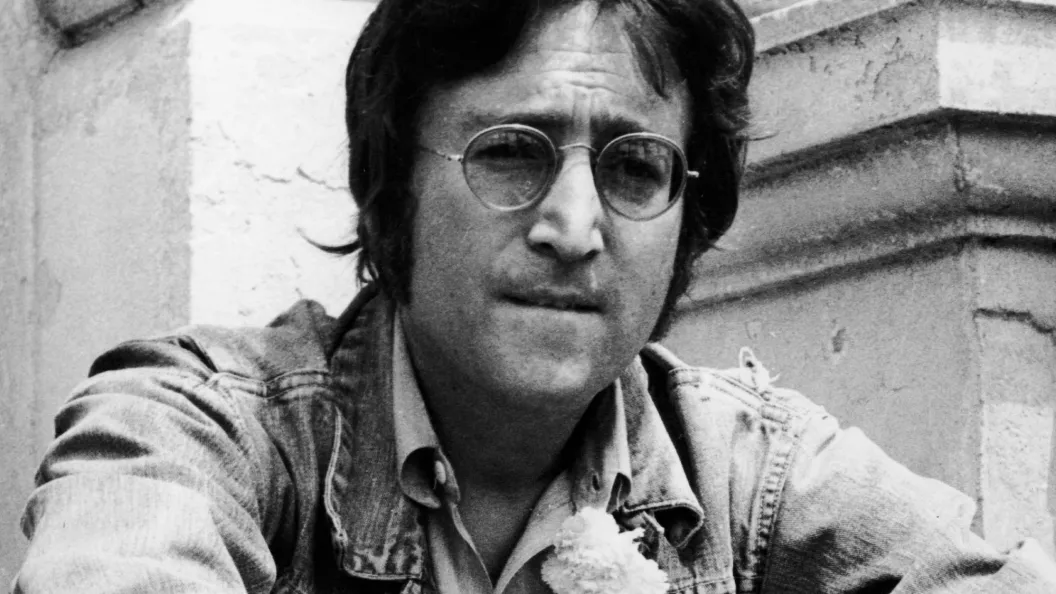
The world intently awaited John Lennon’s first move following the breakup of The Beatles. Many expected him to step up with something commercial and easy to digest as a way of breaking in his solo career with a hit. Instead, Lennon released the foreboding, harrowing, and compelling John Lennon/Plastic Ono Band. The direction of the album was, in part, dictated by Lennon’s sessions with a doctor practicing a relatively untested method of therapy.
Screaming to Success
John Lennon was the first to leave The Beatles and the last to release a solo album. Lennon made his announcement that he was departing the group in September 1969 (although that message wasn’t relayed to the public at the time). John Lennon/Plastic Ono Band didn’t arrive until December 1970. By that time, the other three Beatles had already released their first post-group LPs.
Part of the reason that it took so much time was that Lennon was busy trying to heal himself. To do that, he aligned with Dr. Arthur Janov. Janov’s primal scream therapy method helped Lennon unlock the feelings that were pouring into the record.
The connection between the two men came when Janov’s publisher sent early copies of the book detailing his techniques to several celebrities to try and drum up interest. Lennon immediately identified with Janov’s teachings about how childhood trauma was often left unresolved and thus led to adult unhappiness. He called Janov, asking if he could become one of his patients.
John Lennon as Patient
Throughout 1970, John Lennon met with Janov. First, Janov came to the ex-Beatle in England. Wanting to continue his practice on his home turf, Janov then invited Lennon and Yoko Ono to join him in Los Angeles. The Lennons spent several months in 1970 undergoing the treatment.
Lennon described the process in a 1980 interview with David Sheff:
“They do this thing where they mess around with you until you reach a point where you hit this scream thing. You go with it – they encourage you to go with it – and you kind of make a physical, mental, cosmic breakthrough with the scream itself.”
The two men didn’t quite see eye-to-eye by the end of their time together. Janov felt that Lennon needed to stick around longer to complete his treatment. Meanwhile, Lennon felt miffed that Janov was trying to film one of his sessions. Besides, Lennon had to get back to England. He had an album to make.
‘Plastic’ Fantastic
If nothing else, Lennon’s time with Janov clarified what kind of album he wanted to make. Lennon dove deep into the wounds suffered in his childhood while also laying bare the demons he faced in his everyday life, even as one of the biggest stars in the world.
Any doubts that Janov’s therapy had an impact were removed by one listen to the song “Mother”. The subject matter, specifically his tortured feelings for his parents, came directly from those sessions. And Lennon uncorks some wild screams at the song’s end that also correlate to the therapy.
Lennon helped popularize Janov’s approach, which, it should be noted, was denigrated by many other therapists as nothing more than a fad. Nonetheless, it deserves some credit for helping to unleash an unforgettable record by a rock legend.
Photo by Keystone-France/Gamma-Keystone via Getty Images
The post Did You Know John Lennon’s Therapy Sessions Inspired His First Post-Beatles Album in 1970? appeared first on American Songwriter.
Author: Jim Beviglia
« Reba McEntire Mourns Dolly Parton With Poignant Tribute: “I’ll Never Forget Our Last Conversation”
Dolly Parton Death Announcement Transcript: One Detail Crushed Us »