


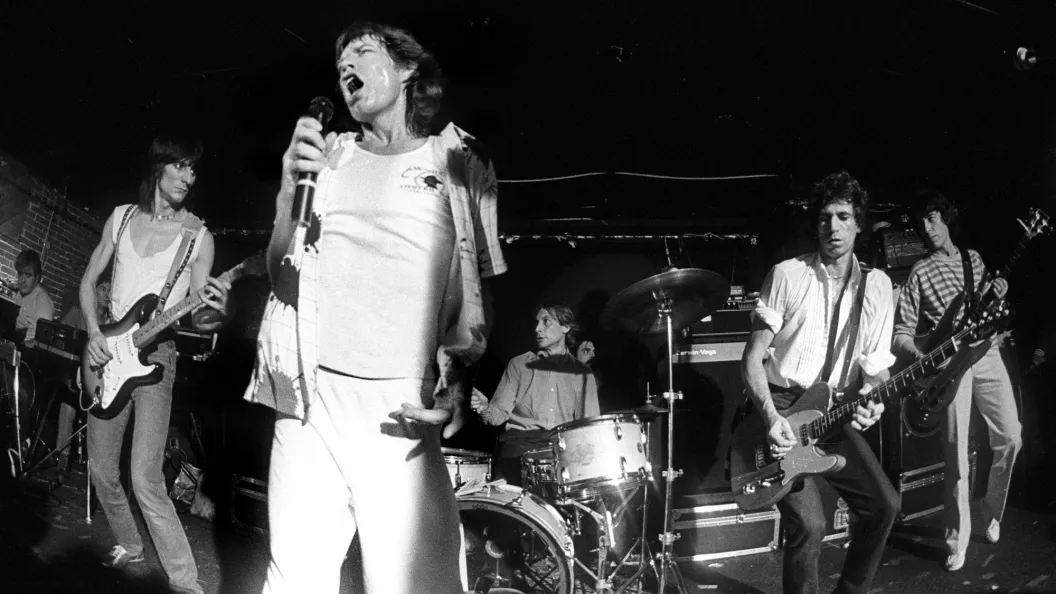
Associations with all things hedonistic, demonic, and destructive are par for the course for being in a rock ‘n’ roll band. When external tragedies inevitably feed into these narratives, it can be even harder for a band to get out of the shadow of the public’s dark perception of them. Over the course of their decades-long career, nothing illustrates this point quite like The Rolling Stones’ 1968 track “Sympathy For The Devil” and its implications after the Altamont Speedway Free Festival.
Organizers predicted the Altamont Speedway Free Festival would be a West Coast version of Woodstock. However, the event would come to define the end of counterculture, not its perpetuity, after disaster broke out across the festival grounds. At various points throughout the festival, there were hit-and-run car accidents, incidents of drowning, and, most notably, the murder of a young Black man named Meredith Hunter, a frantic and chaotic crime that took place in the middle of the crowd.
The Rolling Stones were on stage while this was happening—a violent and tragic consequence of the Hells Angels running security with too few resources and there being too many people (and drugs) at the venue. The band’s proximity to these horrific events inevitably bled into the public’s perception of them and their songs, too.
Mick Jagger Said “Sympathy For The Devil” Felt Different After Altamont
The Altamont Speedway Free Festival effectively marked the end of the counterculture movement. The free love craze had flown too close to the sun, so to speak, and people were finding out about the negative consequences of prolonged psychedelic drug use in real time. The entire experience was like a bucket of ice-cold water, dousing the zeitgeist. People wondered, “Could songs like ‘Sympathy For The Devil’ be to blame?”
Jagger, however biased he may be, would later say the greater societal implications weren’t burdening him too greatly. In a 1995 interview with Rolling Stone, Jagger said the news of Meredith Hunter’s murder was “just awful. You feel a responsibility. How could it all have been so silly and wrong?”
“But I didn’t think of these things that you guys thought of, you, in the press: this great loss of innocence, this cathartic end of the era… I didn’t think any of that. That particular burden didn’t weigh on my mind,” he continued. “It was more how awful how it was to have had this experience and how awful it was for someone to get killed and how sad it was for his family.”
Still, Jagger admitted that he couldn’t help but shy away from songs like “Sympathy For The Devil” after a moment like that. “It became so involved with [Altamont], sort of journalistically and so on.” Black magic, Jagger said, was “not really what I meant.”
Photo by Ron Pownall/Getty Images
The post How a 1969 Tragedy Caused Mick Jagger To Second-Guess This Classic Rolling Stones Track appeared first on American Songwriter.
Author: Melanie Davis
« 3 Songs From the 1990s That Will Instantly Turn You Into a Singer-Songwriter Fan
A “Literal Dream” Inspired One of Creed’s Most Popular Songs »