


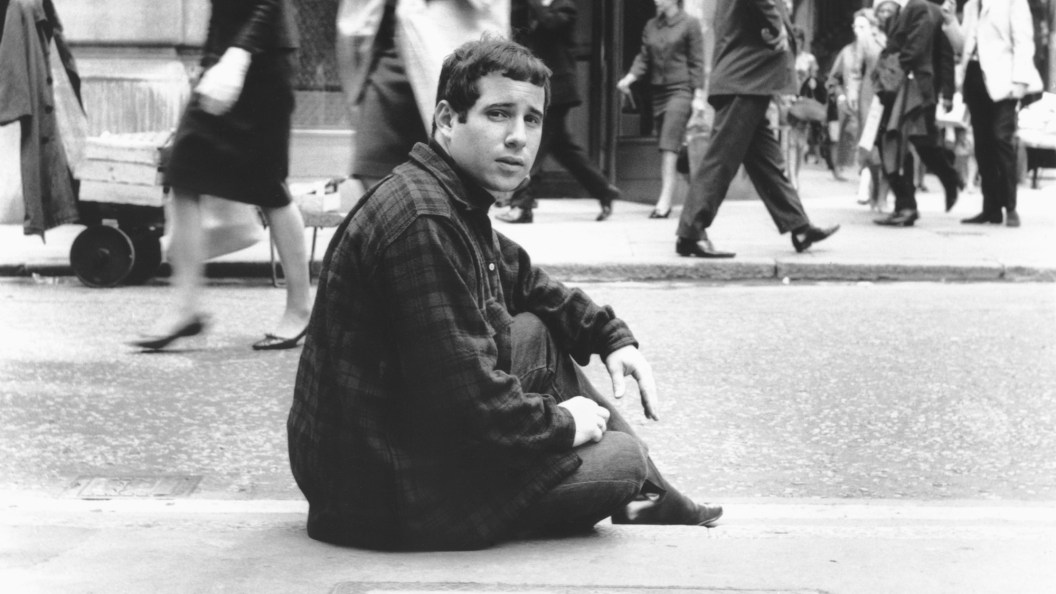
Paul Simon had pure intentions behind Graceland. He fell in love with South African rhythms and melodies and decided to blend them with his folky sound. Nevertheless, this album landed him in plenty of hot water. The timing of his album’s release shrouded it in controversy. Learn more about the making of this record and the backlash that followed its release below.
The Making of Paul Simon’s Most Controversial Album
In 1984, Paul Simon was introduced to ‘township jive’, a style of music from South Africa. He became infatuated with the sounds and researched their origins. He fell down a deep rabbit hole with that section of the world.
“I thought that the group, whoever it was, would be interesting to record with,” Simon once said. “And so I went on a search to find out who they were and where they came from.”
“It was very good summer music, happy music,” he added. “It sounded like very early rock & roll to me, Black, urban, mid-fifties rock and roll, like the great Atlantic tracks from that period.”
He made the decision to head to Johannesburg to get even further acquainted with the sound, but there was one issue: South Africa was stuck in a segregated state. The United Nations had issued a boycott of the country, pushing back against the apartheid system. Simon’s trip broke that boycott, no matter the intention behind it. He was well aware of the potential backlash.
“There were people who said I shouldn’t go,” he conceded. “South Africa is a supercharged subject surrounded with a tremendous emotional velocity. I knew I would be criticized if I went, even though I wasn’t going to record for the government of Pretoria or to perform for segregated audiences — in fact, I had turned down Sun City [Resort, where concerts are played] twice.”
“Before going I … consulted with Quincy Jones and with Harry Belafonte, who has close ties with the South African musical community,” he continued. “They both encouraged me to make the trip.”
The Backlash
Paul Simon eventually left for Johannesburg, set to find musicians to record with. He found them around the city, featuring local musicians like the Afro-jazz band Stimela (guitarist Ray Phiri and drummer Isaac Mtshali) and fretless bassist Bakithi Kumalo.
Simon paid them $200 an hour, which was well over the rates in South Africa and those in New York as well. Simon, well aware of the climate he was walking into, tried to get ahead of the backlash.
His time in South Africa earned name-making songs like “Diamonds On The Soles Of Her Shoes”, “You Can Call Me Al”, and the album’s title track. The album charted well, peaking at No. 3 on the Billboard 200. Even so, the controversy Simon knew he was walking into caught up with him.
“The intensity of the criticism really did surprise me,” he added in the same conversation. “Part of the criticism was ‘Here’s this white guy from New York, and he ripped off these poor innocent guys.’”
But many of those who worked on the album have said the opposite, remembering the recording sessions fondly.
“In South Africa, we had no opportunity,” saxophonist Barney Rachabone added. “You could have dreams, but they never come true. It really destroys you. But Graceland opened my eyes and set a tone of hope in my life.”
Graceland will always be an album of two conflicting truths. It’s some of Simon’s best work, a deeply unique record, and his intentions paid homage to the sounds of South Africa. But he did cross a line that struck an odd chord with listeners amid apartheid. Both of these realities exist within this legendary record. Revisit the sounds of Graceland above.
(Photo by Chris Walter/Michael Ochs Archives/Getty Images)
The post The Making of Paul Simon’s Most Controversial but Beloved Album appeared first on American Songwriter.
Author: Alex Hopper
« 3 Songs From 1969 That Teens Couldn’t Stop Playing in Their First Car
Knowing These 3 Forgotten Songs From the 1980s Will Make You Feel Old »