


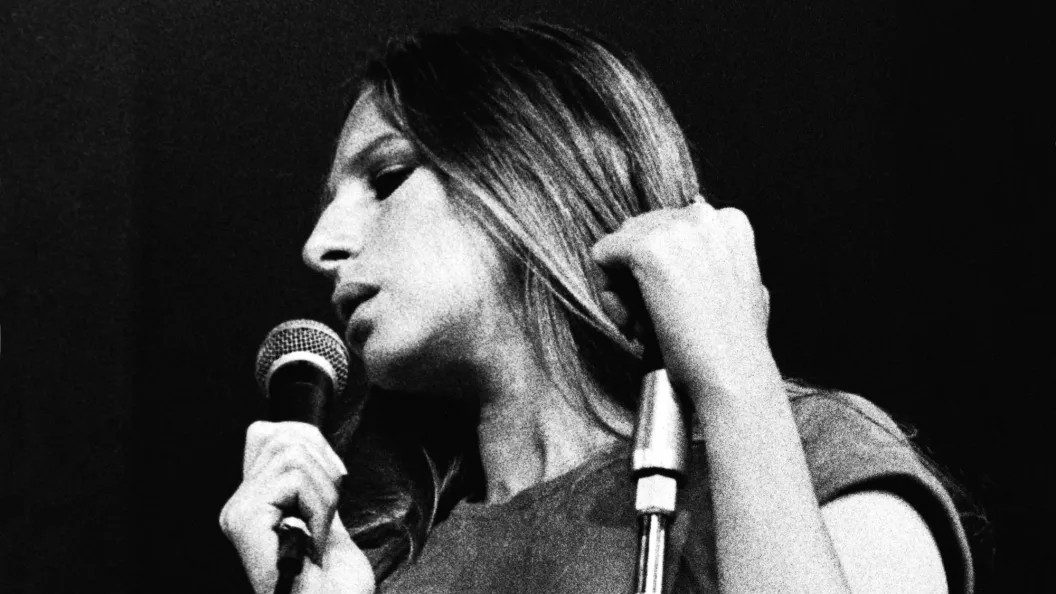
When folks think about the music career of Barbra Streisand, it’s understandable if they concentrate on her mastery of torch songs, jazz ballads, and Broadway showstoppers. But there was a time when she went looking for the brass ring in pop music with a more modern bent.
In 1971, Streisand recorded an album full of songs from the finest pop songwriters of the era. And she came away from it with a hit single that was a far cry from her usual fare.
New Musical Challenges
What was it that spurred Barbra Streisand to stray from her highly lucrative musical path full of antiquated styles and film and stage soundtrack dominance? It could have been an artistic itch that she needed to scratch. Not even 30 years old as the 70s dawned, it’s likely that her musical tastes occasionally ran to pricklier, more adventurous fare than the music for which she was known.
Or it could have been that the old style was starting to produce diminishing returns. Her 1969 album What About Today? attempted to update her style with covers of The Beatles and Paul Simon. But the songs that she chose tended to be orchestrated, slower numbers, not far out of her comfort zone. And the record didn’t sell nearly as well as previous efforts.
For her next musical move, Streisand wanted more muscle, more backbeat. She hired producer Richard Perry, a savvy choice. It was Perry’s first major production, but he’d soon go on to helm some of the 70s biggest records. Streisand told Perry to beat the bushes for work from the best pop/rock songwriters of that moment. Laura Nyro immediately came to Perry’s mind.
A “Stoney” Surprise
Nyro’s own work was criminally underappreciated, even while covers of her songs raided the pop charts with regularity. By 1971, artists as diverse as Blood, Sweat & Tears, The 5th Dimension, and Three Dog Night had scored big with her songs.
Perry chose the Nyro songs “Time And Love” and “Stoney End” for Streisand to sing. Streisand hesitated on the latter song, worried that she didn’t quite grasp the lyrics and that a reference to Jesus went against her Jewish beliefs. But Perry kept after her, insisting that the song had hit written all over it.
Streisand trusted her producer and gave a vibrant performance. And “Stoney End” served its purpose. The song made it to No. 6, just the second Top 10 hit of her career and her first in seven years after breakthrough single “People” managed the feat in 1964.
Behind the Lyrics of “Stoney End”
You have to give Barbra Streisand credit for rolling the dice on a song with such fierce, fearless lyrics as “Stoney’s End”. The song features a narrator barreling toward the titular location despite her best intentions. Her religion failed her, and so did a relationship: “With love light in his eyes/But the light flickered out and parted/As the sun began to rise.”
The final verse presents some masterfully evocative images. “’Cause the sky has lost control,” Streisand sings. “’Cause the fury and the broken thunder’s/Come to match my raging soul.” “Now I don’t believe I wanna see the morning,” she says at her lowest, before beckoning the comfort of her mother’s “cradle” to redeem her.
Streisand proved adept at handling the rollicking, uptempo arrangement, and she got inside the head and heart of a character much different than herself. She wouldn’t release too many other songs like “Stoney End”. Maybe that was because she got it so right the first time.
Photo by Ellen Graham/Getty Images
The post How Barbra Streisand Expanded Her Musical Boundaries With Help From an Underappreciated Singer-Songwriter appeared first on American Songwriter.
Go To Source | Author: Jim Beviglia
Every Baby Boomer Alive Remembers These 4 Classic Pop Jams From 1973 »