


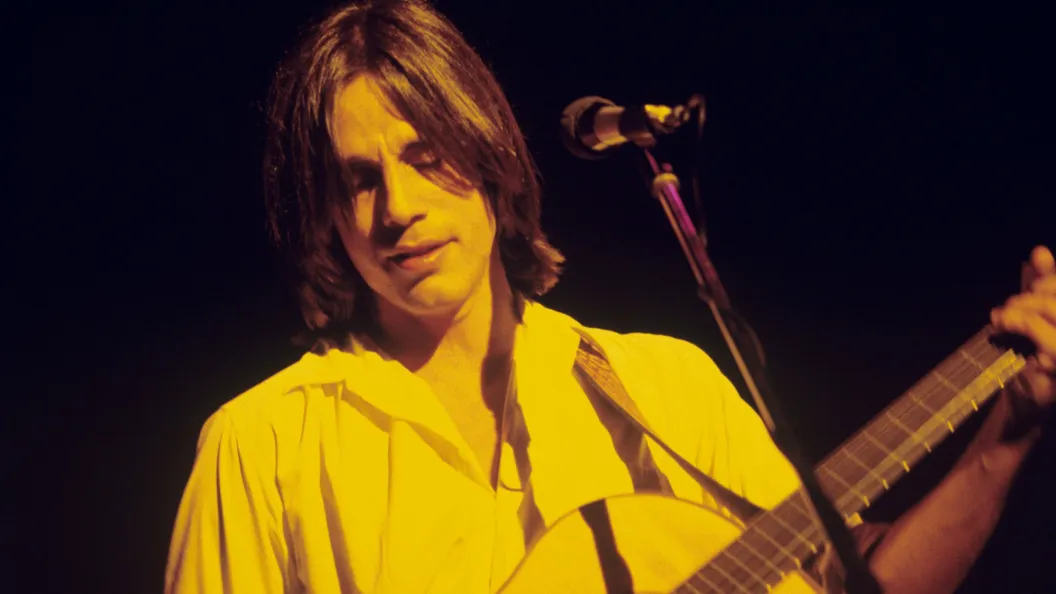
Jackson Browne has long been recognized for his ability to inject realism into his songwriting. His songwriting is simply confessional. But even for Browne, there are topics too tough to explore. Even if he didn’t let his personal tragedy affect the content of his seminal album, The Pretender, it underscored that work. Learn more about the events leading up to this classic record and the unforeseen circumstances that almost derailed it.
[RELATED: Remember When Jackson Browne Reinvented the Live Album in 1977?]
Jackson Browne’s ‘The Pretender’
Browne’s 1976 record, The Pretender, was a masterclass in societal commentary. This record captured the breakdown of the 1960s counterculture, adult resignation, and consumerism. Songs like “Here Come Those Tears Again”, “Your Bright Baby Blues”, and “Sleep’s Dark And Silent Gate” speak to this album’s sharp point of view and timeless narratives.
But underneath the magic of this album was a deep personal tragedy for Browne. Several years before this album, Browne met his first wife, Phyllis Major. Shortly after his relationship with Joni Mitchell, the songwriter and Major hit it off and married in 1975.
The pair were only married for a short time but had a child together named Ethan. Despite only being husband and wife for four months, this marriage had a massive impact on Browne’s life. Their relationship was ultimately cut short due to Major’s suicide. The model and actress reportedly had multiple attempts before she took her life on March 25, 1976.
Browne was already working on The Pretender before this tragedy, but completely shut things down in light of it.
“Her death was a total surprise,” Browne once said. “Maybe it should not have been, but it was… We just stopped until I was ready to resume.”
Despite Browne’s confessional writing style, he didn’t opt to make this record about Major, save for one song. “Many people think that if a record comes out after an event, that the event is somehow represented in the songs,” Browne continued. “But those songs were written before she died, with the exception of ‘Sleep’s Dark And Silent Gate’. That was written after.”
“Never should have had to try so hard / To make a love work out, I guess / I don’t know what love has got to do with happiness / But the times when we were happy / Were the times we never tried,” he sings in that track.
The rest of the album is about broader subjects, but in the context of this event, they take on a somber, existential tinge.
“It’s grappling with the question of whether the life you’re living is the life you thought you were headed for,” Browne once said of the title track. “‘The Pretender’ is an open question: do you find life’s best qualities by having children and a job, or in tearing those things down?”
Browne may not have been dictating his experience with Major in this album, but it’s aptly emotional and deeply visceral. Whether he meant it to be reflective of his situation or not, The Pretender was the perfect album for this period of his life.
(Photo by Ebet Roberts/Redferns)
The post The Personal Devastation That Nearly Derailed Jackson Browne’s Timeless Album, ‘The Pretender’ appeared first on American Songwriter.
Go To Source | Author: Alex Hopper
« Reba’s Son Shelby Remembers Brandon Blackstock, One Year Later
3 Country Breakup Songs From the 70s That Everyone Loves (Even if You’re Happily Taken) »