


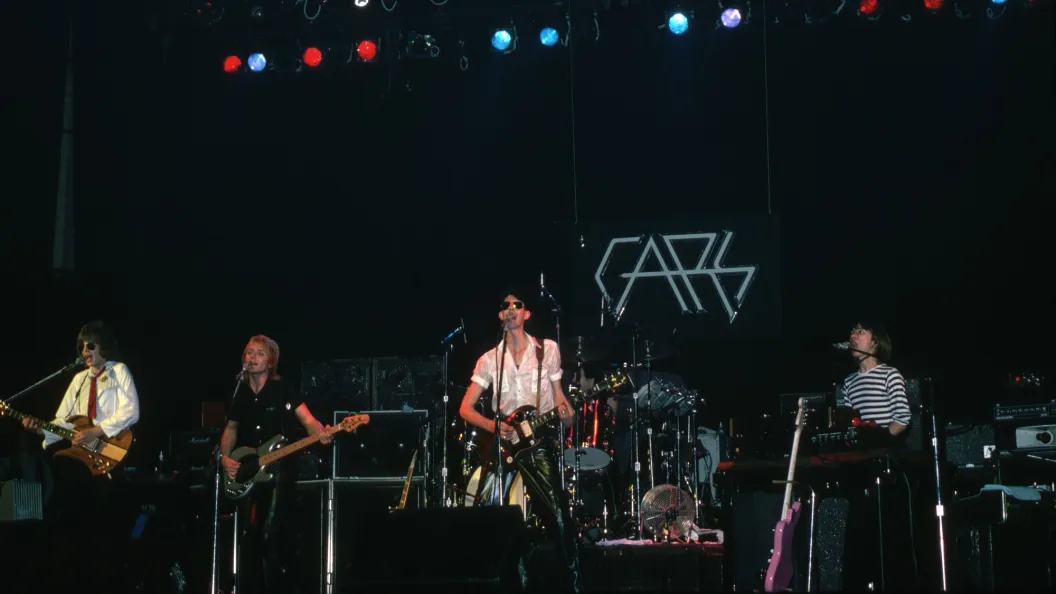
Most legendary bands veer off the beaten path at some point during their careers. If they don’t try to expand their musical horizons, they risk stagnation. The Cars understood this principle, which explains their 1980 album Panorama.
The band challenged critics and fans with a bold new sound that leaned into robotic darkness. To this day, it remains polarizing, with some seeing it as their most underrated LP and others feeling like it was a step too far to the outer limits.
Big Hits, Little Respect
When The Cars debuted with their 1978 self-titled album, it was so ridiculously assured that some people felt it was too good to be true. It was almost as if critics were looking for reasons to denigrate the band. Looking back on it now, those folks seemed to be grasping at straws.
When the band returned with Candy-O in 1979, the murmur of complaint about the band rose to more of a steady rumble. That album didn’t feature as many obvious crowd-pleasers, instead diving into more brooding lyrical territory while expanding the sonic horizons beyond their New Wave wheelhouse.
The Cars changed management heading into 1980, which led to a legal dustup with their original manager. When you consider that controversy was ongoing in addition to the blowback the band was starting to receive, perhaps it’s not surprising that their next record reflected a growing unease and dissatisfaction.
Accepting the Criticism
Ric Ocasek, who wrote The Cars’ songs, summed up the feeling the band brought to Panorama in a Rolling Stone interview:
“That’s the joke of the whole thing: you can’t be loved by everybody. I know that, and I’ve really come to accept it. That denial of love, in fact, eases my mind.”
Panorama was recorded with producer Roy Thomas Baker, as were the band’s first two albums. It contained precious few of the flickering rhythms and rafter-rattling harmonies that characterized The Cars album and even some of Candy-O.
Instead, the title track introduced the record with a driving, mechanical drum machine rhythm and weird vocoder vocals. Songs like “Don’t Tell Me No” and “Up And Down” confronted listeners with their aggressiveness. Even a ballad like “You Wear Those Eyes” was more elusive than ingratiating.
“Go” Time
Panorama did contain one absolute sure shot. “Touch And Go” might just be The Cars’ single greatest recording. An incredible mixture of swaying synths, odd rhythmic patterns, Ocasek’s pronouncements about fickle passion, and Elliot Easton’s searing guitar, it was the obvious choice for the first single.
But it mostly failed that assignment, only making it to No. 37 in the US. Even when they seemed to be giving folks what they wanted, The Cars weren’t pleasing anybody. The critical notices for Panorama were the weakest of their career, and the album also sold less than its two predecessors.
Going forward from there, the band returned to a more pop-oriented approach on Shake It Up in 1981 and leaned in that direction even more with Heartbeat City in 1984. Panoroma, meanwhile, remains a fascinating outlier by a band willing to risk frustrating listeners in the name of artistic advancement.
Photo by LGI Stock/Corbis/VCG via Getty Images
The post Remembering When The Cars Went the Weird, Wild Route on Their Third Album in 1980 appeared first on American Songwriter.
Author: Jim Beviglia
3 One-Hit Wonders From 1973 That 70s Kids Will Never Forget »