


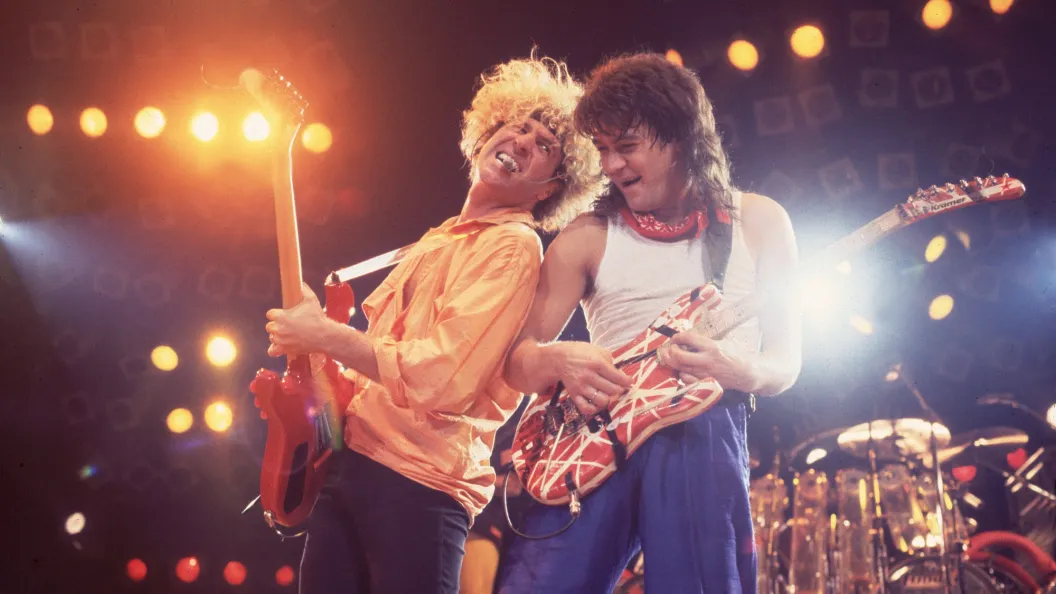
When David Lee Roth left Van Halen, many music fans wondered if the band could ever again hit their previous heights. Not only did they reach those standards on the 1986 album 5150, but they also surpassed them, at least in terms of commercial success.
The debate might still be raging about whether the artistic levels of this new version of the band could compare with the Roth-fronted era. But there’s no doubt that new lead singer Sammy Hagar gave a necessary jolt to the band upon his arrival for 5150.
Roth’s Exit
Van Halen’s 1984 album represented a pinnacle for the group. They managed to transcend their hard rock origins and find a way to the mainstream, delivering one of the biggest albums of that magical year in music. And then, just like that, their lead singer was gone.
Artistic and personal differences between Roth and Eddie Van Halen, the group’s musical maestro, simply became untenable. Depending on which interview you read, Roth was either fired or left of his own volition. In any case, arguably the biggest rock band in the world suddenly needed a singer.
The search was relatively brief, although it did encompass a few possibilities. Van Halen asked Patti Smyth of Scandal about her availability, but Smyth, pregnant at the time, didn’t think she’d be able to do it. Instead, Van Halen soon focused on Sammy Hagar as the perfect fit.
Hello, Hagar
By that time in his career, Hagar had put together a solid body of work as both the lead singer of a hard rock band (Montrose) and a successful solo act, with hits like “I Can’t Drive 55”. He brought with him not only his singing chops but also the ability to contribute as a writer.
Van Halen started work on the album that would become 5150 in November 1985 at Eddie Van Halen’s home studio. The group also made another big change from past procedure by jettisoning longtime producer Ted Templeman. Instead, Eddie co-produced with Donn Landee, an engineer on previous VH records, and Mick Jones of Foreigner.
The material changed to a degree as well. Roth often fretted about Eddie’s insistence on using synths, thinking that Van Halen fans wanted to hear heavy guitars. Without Roth’s objections, Eddie leaned further into synths, which, in turn, also opened the doors to power ballads like “Dreams” and “Love Walks In”.
Immediate Success
If there were doubts about how this would all turn out for the band before they released the record, they were quickly assuaged by some industry feedback. Hagar played a cut of the first single “Why Can’t This Be Love” for Mo Ostin, the head of Warner Bros. Records at the time. Ostin famously noted that he smelled money in the air.
He wasn’t wrong about that. Songs from 5150 inundated both rock and pop radio throughout 1986, with three singles ending in the Top 25. The album sold and sold and sold, ending up six times platinum and giving the band their first-ever No. 1 album in the US.
It also started up the debate, still ongoing, about which version of the band was the best. Let’s just say it’s a tremendous credit to Sammy Hagar’s contributions and to the band’s overall resiliency that 5150 even opened up that conversation.
Photo by Paul Natkin/Getty Images
The post The “Van Hagar” Era of Van Halen Began With This Massive Hit Album in 1986 appeared first on American Songwriter.
Author: Jim Beviglia
« “So Sorry”: Country Star Issues Statement After Delaware State Fair Concert Is Called Off
‘Duck Dynasty’: Phil Fired Back After Producers Edited Out Jesus »