


What makes a good chorus? Its catchiness? Ease of memorability? This writer would humbly argue that the best choruses are ones that facilitate an emotional shift. Higher energy levels, new modalities, a change in rhythm—these subtle and not-so-subtle shifts are what give us stomach butterflies, goosebumps on our arms, and tears in our eyes.
Having said that, this writer would also argue that 1960s grunge pioneer Neil Young is unmatched in writing a deceptively powerful chorus. Here are five songs that prove it.
“Ohio”
One of Neil Young’s most powerful choruses came from a song he recorded with David Crosby, Stephen Stills, and Graham Nash in 1970. “Ohio” was a direct response to the Kent State shooting on May 4, 1970, and the chorus perfectly captures this confused anger and grief. The sudden jump to the minor V chord is incredibly impactful, and it’s buoyed further by the lyrics.
“Gotta get down to it, soldiers are cutting us down / Should have been done long ago / What if you knew her and found her dead on the ground? / How can you run when you know?”
“Southern Man”
“Southern Man” from Neil Young’s 1970 album, After The Gold Rush, follows a similar formula to the chorus of “Ohio”. Featuring rich vocal harmonies and a chord progression that oscillates between melancholy and empowering, this Neil Young chorus is certainly one of his more dramatic. Moreover, in just four lines, Young was able to make a highly powerful statement against centuries of racial discrimination concentrated in the southern U.S.
“Southern man, better keep your head / Don’t forget what your Good Book says / Southern change gonna come at last / Now your crosses are burnin’ fast, Southern man.”
“Tell Me Why”
One of the most distinctive parts of a Neil Young chorus is the leap to a major seventh chord, which instantly creates an airy, dreamlike quality. “Tell Me Why”, also from After The Gold Rush, uses this technique to stunning effect. The verse progression is fairly straightforward and driving. Once Young gets to the chorus, the song seems to blossom open.
“Tell me why is it hard to make arrangements with yourself? / When you’re old enough to repay, but young enough to sell?” Despite Young later saying he didn’t know what he meant when he wrote this song, the short-and-sweet chorus packs a big punch.
“Do I Have To Come Right Out And Say It?”
Speaking of major seventh chords, Neil Young was already testing this trick out with his former band, Buffalo Springfield. “Do I Have To Come Right Out And Say It” from the band’s 1966 eponymous debut follows a similar structure. The verses use plain major triads. Then, in the chorus, the progression opens up with the introduction of the major seventh I chord.
“Indecision is crowding me, I have no room to spare / and I can’t believe she’d care / Like a dream she has taken me, and now I don’t know where, and a part of me is scared.”
“Old Man”
Finally, a sneaky characteristic of Neil Young’s choruses is their deceptive simplicity. As the defiant, somewhat ratty godfather of grunge, Young’s music has often been lauded for doing a lot with a little. Riffs aren’t technically complex. Moreover, melodies are easy to sing…so people assume. But dive deep into Young’s discography, and you’ll find that the Canadian singer-songwriter often used his choruses to highlight his impressive range by jumping the octave.
“Old Man” is a great example of this, climaxing into a harmony-filled chorus at the top of his range. “Old man, take a look at my life, I’m a lot like you / I need someone to love me the whole day through.”
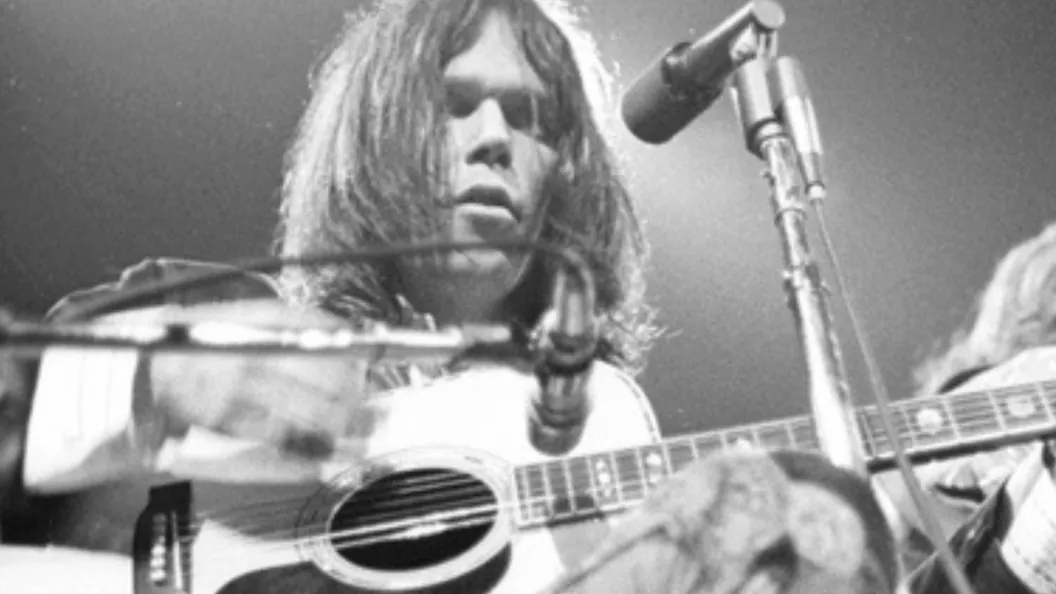
Photo by Tom Copi/Michael Ochs Archives/Getty Images
The post 5 Songs That Prove This 1960s Grunge Pioneer Is One of the Best Chorus Writers in the Business appeared first on American Songwriter.
Go To Source | Author: Melanie Davis