


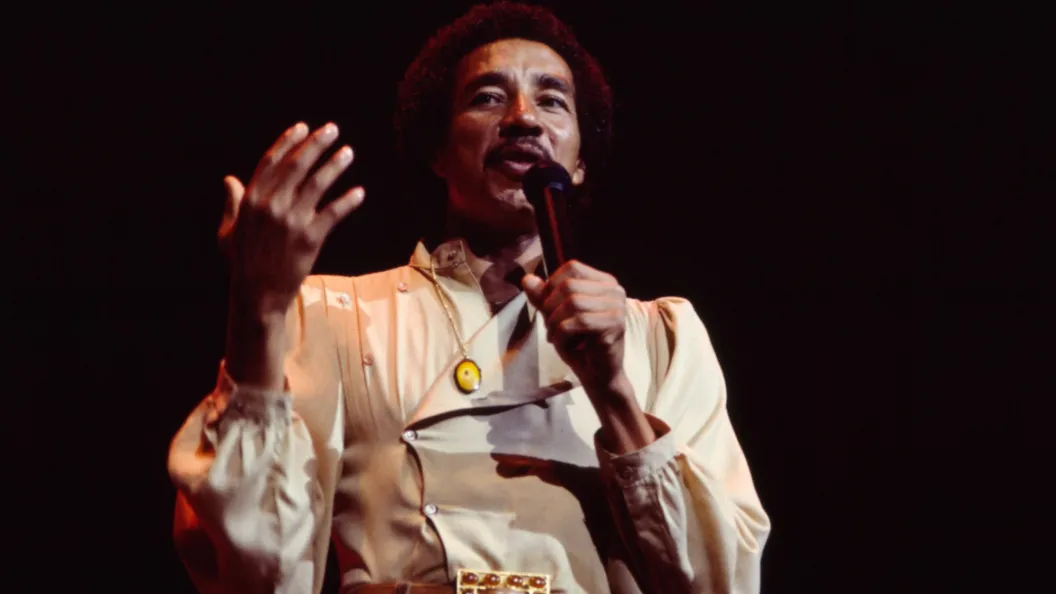
Smokey Robinson’s incendiary talent fueled the Motown label as much as any other artist. Whether he was writing, producing, or performing, Robinson was at the epicenter of a high percentage of the label’s most iconic hits.
Those hits dried up for him in the 70s once he left behind his backing band The Miracles. At least until Robinson delivered a classic called “Cruisin’” that defined soul music for its era as much as any of his earlier songs did for theirs.
Solo Smokey
Motown’s success helped inspire other companies to get behind R&B artists. That development, in turn, lessened the impact of Motown. By the early 70s, many of the groups that enjoyed the greatest success for the label had started to either accrue diminishing returns or scatter to the winds.
Smokey Robinson helped steer Motown through its greatest heyday. In 1972, Robinson, citing a desire to focus on family and to concentrate as well on his role as a Motown Vice President, decided to leave the Miracles and retire from making music.
Unsurprisingly, the retirement part didn’t last. But after going solo in 1973, he struggled to make the same kind of impact. His 1975 album A Quiet Storm proved impactful from a stylistic standpoint. But the crossover hits just weren’t happening. It was around that time that his longtime collaborator Marv Tarplin handed him a piece of music. Robinson knew the track had potential, but he sat on it until he found the right words.
One Song Leads to Another
Time and again, Robinson would play Tarplin’s track but couldn’t figure out the right lyrical accompaniment. One day, while he was driving, one of the couplets that would end up in the finished song popped into his head. He had a foundation, but he still needed the lyrics for the main hook.
On the car radio, Young Rascals’ 1967 hit “Groovin’” popped up. Robinson plopped the term “Groovin’” into the lyrics of the song he was writing. But it still didn’t evoke the sensuality that the music seemed to be promoting.
Suddenly, he switched that word to “Cruisin’”. From there, the rest of the song fell into place with little effort. “Cruisin’”, released in 1979 on the album Where There’s Smoke…, finally gave Robinson the huge pop hit he’d been looking for as a solo artist, thanks to the track peaking at No. 4.
Behind the Lyrics of “Crusiin’”
“Cruisin’” shows Robinson’s mastery of the bedroom soul style that he helped initiate. The lyrics are just suggestive enough without being tawdry, focusing on the spiritual nature of intimacy. “Don’t be confused, the way is clear,” Robinson insists. And then: “You’re gonna fly away/Glad you’re goin’ my way.”
Robinson promises that no forethought is needed for this to work. “Everything’s right, do what you must,” he coos. “Let the music take your mind,” he sings to his significant other. “Just release and you will find.” And he emphasizes that this rendezvous is more than a temporary tryst. “Cruisin’ is made for love,” he insists.
“Cruisin’” helped Robinson reestablish himself in the pop world, a development that would lead to an even bigger hit two years later with the similarly themed “Being With You”. More than anything, it proved that Robinson’s patience in finding the exact right words for the music more than paid off.
Photo by Gary Gershoff/Getty Images
The post Smokey Robinson’s Solo Breakthrough Is a Testament to His Patience With Writing Lyrics appeared first on American Songwriter.
Go To Source | Author: Jim Beviglia
« Alan Jackson’s Final Song Was Surprising, But Perfect [SET LIST]
3 Rock Records That Were Made To Anger the Masses (And Succeeded) »