


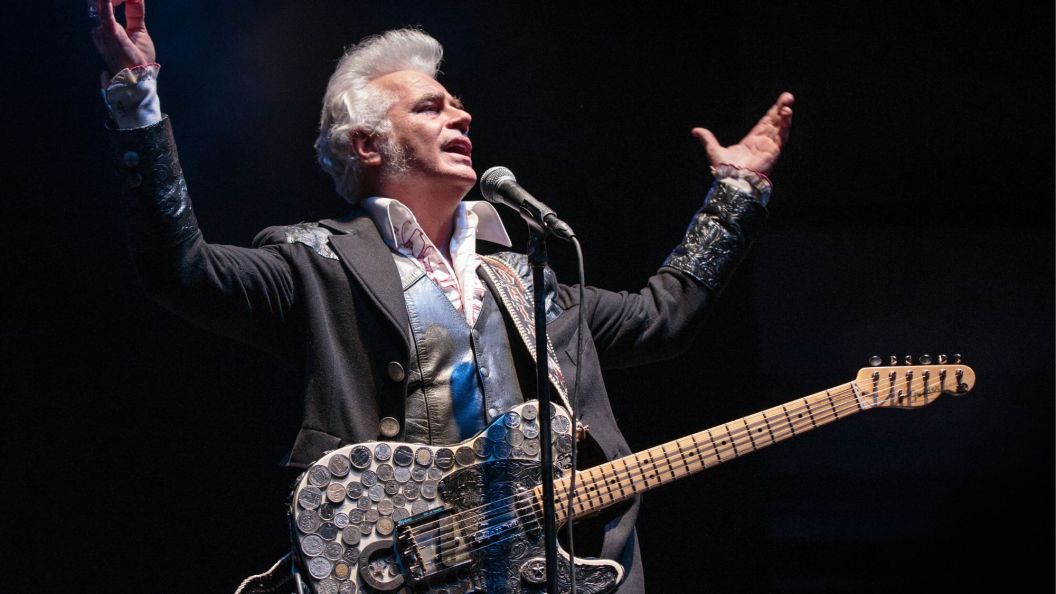
On this day (October 7) in 1962, Dale Watson was born in Birmingham, Alabama. His four-decade career in music has seen him share stages with the likes of Merle Haggard, Johnny Cash, Willie Nelson, and Kris Kristofferson. Still, Watson balks at the “country” label. Instead, he prefers to think of his music as “Ameripolitan” — which blends honky-tonk, hillbilly, western swing, and rockabilly. Carving out his niche at the intersection of the Austin country music scene and the Bakersfield sound, he is known for songs like “I Lie When I Drink” and “Feelin’ Haggard”.
Today, we’re highlighting the life and career of Dale Watson in honor of his 64th birthday.
Who is Dale Watson?
Born in Alabama and raised outside of Wilmington, North Carolina, Dale Watson awoke most Sunday mornings to the sound of his father playing guitar along with his records by Lefty Frizzell, Hank Williams, and George Jones.
Those traditional country influences seeped into Watson’s DNA. However, he disagrees with the notion that he merely pays tribute to the outlaw country legends of yore.
“I like to tell them that it’s in the vein of Merle Haggard, Buck Owens, Johnny Cash, Bob Wills type stuff. But it’s new music,” he told Country Standard Time in 2006. “It’s just about issues that are pertinent to me and to life today. It’s a new house built with an old blueprint.”
Getting His Start
At age 15, Dale Watson moved with his family to Pasadena, Texas. A high school student by day, he played Houston beer joints and honky-tonks by night with his brother, Jim. They called themselves the Classic Country Band.
A songwriter since age 12, Watson continued playing the Houston scene for seven years after graduating from high school.
In 1988, he moved to Los Angeles on the advice of rockabilly singer Rosie Flores. There, he joined the house band at North Hollywood’s now-legendary alt-country venue the Palomino Club.
“Too Country for Country”
After recording several singles in Los Angeles, Dale Watson left the West Coast behind for Nashville. At first, he wrote songs for a publishing company run by Gary Morris (of “The Wind Beneath My Wings” fame).
However, finding that commercial country music didn’t suit his tastes, Watson relocated again — this time to Austin, Texas. Forming his backing band the Lone Stars, he secured a recording contract with Hightone Records and released his debut album, Cheatin’ Heart Attack, in 1995.
Watson took playful aim at the Nashville establishment on songs like “Nashville Rash”: Help me Merle, I’m breakin’ out in a Nashville rash / It’s lookin’ like I’m fallin’ in the cracks / I’m too country now for country, ain’t that just like Johnny Cash?
He continued in that vein with his next two albums on Hightone Records. Switching to Koch in 1998, he drew acclaim with The Truckin’ Sessions, devoted to the country music subgenre of truck-driving songs.
The Tragedy and the Comeback
Sadly, Dale Watson lost his fiancee, Terri Herbert, in a September 2000 car accident. The grief-stricken singer spiraled into a destructive cycle of booze and pills, checking himself into a mental institution after nearly dying from an overdose that Christmas.
In 2001, Watson re-emerged with the tribute album Every Song I Write Is For You.
After releasing a couple more albums, he stepped back from music in 2004 to spend more time with his daughters. Back onstage in 2006, he has continued releasing music. Watson released his latest album, Unwanted, in April 2026.
In addition to his musical career, you might have caught a glimpse of Dale Watson on your TV screens. His acting roles include the films The Thing Called Love and On the Borderline, along with the TV show Friday Night Lights.
Addtionally, Watson starred on stage in Ghost Brothers of Darkland County, a southern Gothic musical by Stephen King and John Mellencamp.
Featured image by Suzanne Cordeiro/Corbis via Getty Images
The post Born 64 Years Ago Today in Alabama, the Country Maverick Who Rejected Nashville and Created His Own Genre appeared first on American Songwriter.
Author: Erinn Callahan
« 3 Soft Rock Songs From 1978 That Had Baby Boomers Crying by the Radio