


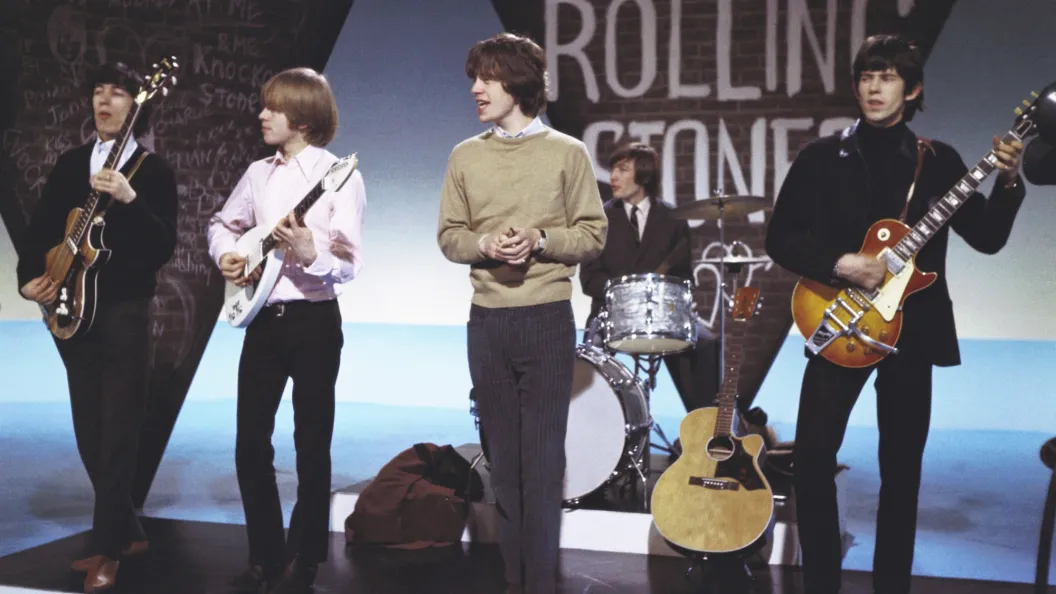
You won’t see Aftermath ranked too high on many lists of The Rolling Stones’ finest albums. Perhaps the reason its reputation is sullied is that, even though it’s a fantastic pop record, the music on the 1966 LP isn’t quite emblematic of the harder-edged work the band would eventually do.
But you’d be making a fair argument if you said that Aftermath is on the short list for the most important albums in Stones history. After all, it unleashed Mick Jagger and Keith Richards as a songwriting duo like never before.
Covers Not Allowed
The massive success of “(I Can’t Get No) Satisfaction” in 1965 cemented The Rolling Stones’ meteoric rise to become one of the world’s biggest bands. One thing holding them back, at least when it came to being compared to their British Invasion brethren The Beatles, was their continued reliance on cover songs.
The band delivered just a handful of originals on each of their first three studio albums. They had reached the point where Mick Jagger and Keith Richards were writing most of the songs they released as singles. But the lack of originals hamstrung the overall impact of their albums.
The Stones decided to change that when it came time to record album No. 4. They recorded Aftermath mostly in two batches, first in November 1965 and then again in March 1966, both times in Hollywood. And each of the 14 songs on the UK version of the album (as well as “Paint It Black”, the hit that was included on the American version) was a Jagger/Richards original.
Brian’s Finest Hour
By the time the band recorded Aftermath, tension was already brewing between Brian Jones and the rest of the group. Yet this was the album where his unique skills shone the brightest. Since the album was more pop-oriented, there wasn’t as much need for Jones to play guitar alongside Richards.
Instead, he hunted around RCA Studios for the right complementary instrument for each track. Jones’ sitar and vibraphone, respectively, transformed the biggest hits from the album, “Paint It Black” and “Under My Thumb”. Elsewhere, he added unforgettable dulcimer, vibraphone, and harmonica parts.
As for the songwriting, Jagger and Richards were mostly writing about their romantic relationships at the time. Some criticized the demeaning sentiments expressed about women in songs like “Under My Thumb” and “Stupid Girl”. But the candor and honesty of their approach certainly set them apart.
The Aftermath of ‘Aftermath’
Aside from the two big hits, Aftermath offers the kind of balance that previous Stones’ albums lacked. Inventive tracks like “Out Of Time” and “Goin’ Home” tested the limits of the studio. And songs like “Lady Jane” and “I Am Waiting” rank among the prettiest in the band’s catalog.
One unintended consequence of Aftermath was that its success convinced the Stones to continue on more of a baroque, psychedelic path. Eventually, that led to Their Satanic Majesties Request, the 1967 dead end of an album that displayed their limitations in that department.
The Stones soon corrected course and found the harder-rocking sweet spot that they’ve cultivated ever since. But Aftermath proved absolutely essential, thanks to the confidence it gave to the Glimmer Twins as composers.
(Photo by Cyrus Andrews/Michael Ochs Archives/Getty Images)
The post Remembering When The Rolling Stones Put Songwriting at the Forefront of a Surprising Album in 1966 appeared first on American Songwriter.
Author: Jim Beviglia
3 One-Hit Wonders From 1975 We Hear All the Time in Shopping Malls and Grocery Stores »