


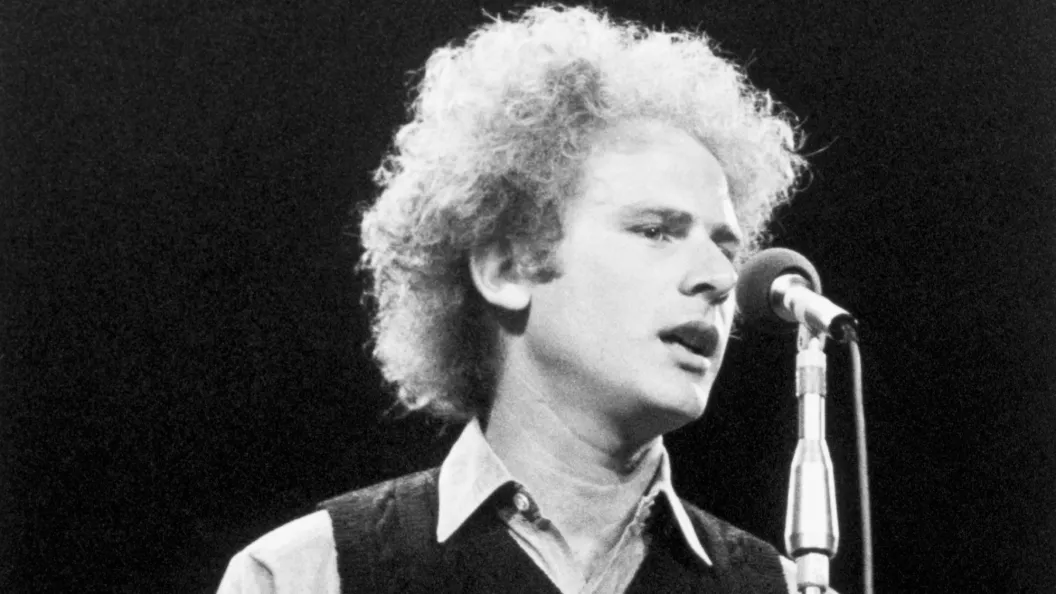
As one half of the most successful pop music duo of the 60s, Art Garfunkel entered his solo career with some hefty expectations. Maybe that’s why he took some time before committing to it.
Once he did make the leap, Garfunkel delivered a hit album titled Angel Clare in 1973. The album played to his strengths as a vocalist while also highlighting his underrated skills as a record-maker.
Art’s on a Break
Released at the beginning of 1970, the Simon & Garfunkel album Bridge Over Troubled Water represented both a towering pinnacle and a swan song for the duo. Their friendship strained over a number of issues, and desirous of new artistic challenges, the two men decided to sever their professional partnership.
Paul Simon released a self-titled album in early 1972 as his first post-S&G offering. But Art Garfunkel took a little while to make his way back to the music world. He continued with the acting career he began in the late 60s. And he also briefly served as a math teacher at a private school in Connecticut.
A 1972 benefit concert with Simon helped spark his interest in music again. Throughout 1973, he worked on his solo debut, named Angel Clare when released in September of that year. More than three and a half years after fans had last heard that golden voice, Garfunkel finally decided to step back into the pop music spotlight.
Belated ‘Angel’
Like Simon, Garfunkel decided to work with Roy Halee, whose engineering and production skills had been a crucial element of so many classic Simon & Garfunkel songs. Garfunkel served as co-producer, using his arranging skills to transform the songs that he recorded from their original or most well-known versions.
Unsurprisingly, Garfunkel had the pick of the litter among session musicians to give Angel Clare a pristine studio sheen. Although Simon wasn’t around to write the songs this time, his old partner still found outstanding material. He covered tracks by Randy Newman and Van Morrison and sang new originals from Jimmy Webb and Paul Williams.
Garfunkel also dug deep into the past for songs such as the folk traditionals “Barbara Allen” and “Down In The Willow Garden”. On the latter song, he coaxed Simon into harmonizing with him, while Jerry Garcia chipped in on guitar.
A 70s Streak
Anticipation for Garfunkel’s return no doubt helped the commercial prospects of Angel Clare. The album peaked at No. 5 on the album charts. Webb’s “All I Need” also gave Garfunkel a smash single.
In terms of its lasting legacy, Angel Clare holds up extremely well. After all, the elements that set it apart, such as Garfunkel’s soaring voice, inventive arrangements, and excellent material, never really go out of style. While some might have been expecting more of a modern statement from him, Garfunkel chose to go the timeless route.
Angel Clare set the tone for Garfunkel’s solo work throughout the 70s. He made up for his belated start by being quite active in the second half of the decade. By the end of it, he’d released four albums, one more than Paul Simon did in that same stretch.
Photo by Bettmann/Getty Images
The post Remember When Art Garfunkel Finally Got Around to His Solo Debut in 1973? appeared first on American Songwriter.
Author: Jim Beviglia
3 One-Hit Wonders From the 1980s We Used To Request on the Radio Every Day »