


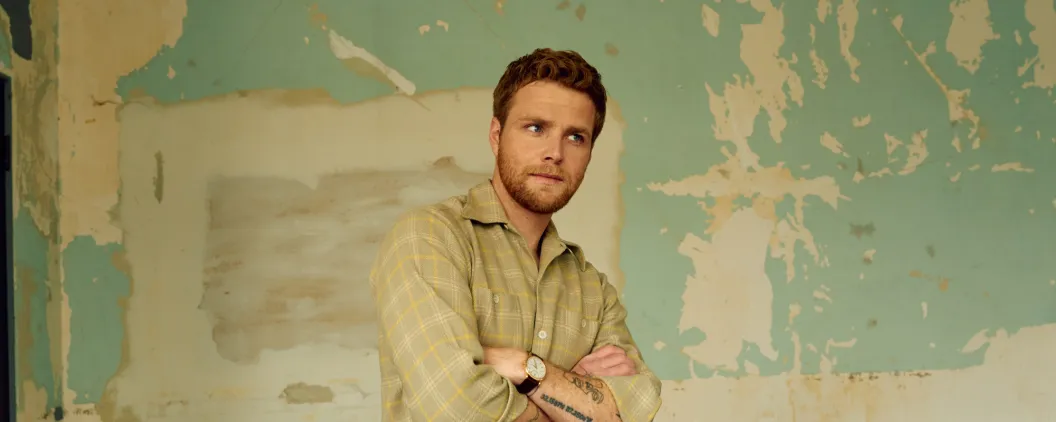
After Alex Warren found superstardom with the 2025 hit song “Ordinary,” he took a beat and set out to create his sophomore album, WILDCHILD, without feeling pressure to repeat that success.
Written solely by Warren and his core group of collaborators—Adam Yaron (producer), Cal Shapiro, and Mags Duval—WILDCHILD takes the listener on a rollercoaster ride of emotions. Warren taps into grief (he lost his father at a young age and, more recently, his mother), love (he married the love of his life, Kouver), heartbreak, and healing through it all.
“The album really shows where I am in my life today. Compared to my first album, which feels like a man who is broken, this one is a man who’s trying to heal,” Warren says. “It’s been really nice to be able to confront those feelings and also be able to share them with the world to give everyone a transparent view into my life.”
While “Ordinary” is a tough act to follow, Warren may have accomplished the impossible, as WILDCHILD just might be his best work yet. The album as a whole feels as if we’re getting a front-row seat to watch him heal and grow in real time, tracking his journey from pain to peace.
“My dad used to call me wildchild growingup, so it’s always had a special meaning, and I even have it tattooed on me,” says Warren. “Creating this album was really healing, therapeutic, and a way for me to continue finding out more about myself.”
Warren sat down with American Songwriter to discuss the meaning behind WILDCHILD, his late father’s influence, John Mayer’s guitar solo, grief, and healing.
American Songwriter: You’ve said that you don’t feel pressure to follow up the mega-hit “Ordinary.” So what are you feeling with this album, WILDCHILD?
Alex Warren: I’m excited. I’m excited for people to hear it, really. It’s going to be cool. I think when you listen to the first [album], it sounds very much like me finding out what kind of musician I am, and I think that’s great. I think everyone needs that. That should be the debut album. I think your debut album should be a group of records that turned you into the musician you are today, which it was.
But I think it was very much like, “Okay, we have an album coming out. What are we throwing in here? What are we not throwing in here?” This one was very intentional. There are 12 songs, one interlude, 13 tracks. Each track is kind of like a life lesson. It’s an experience, but also something that you learn from it. One is teaching you about grief. One is teaching you about loss. It doesn’t need to be loss in the sense of losing someone; it can be loss in the sense of a relationship, or a friendship, or a loss in dying. It could be whatever you want it to be. There’s a falling-in-love song or a breakup song. Every season of life you go through, there’s a record that can help you understand that feeling.
For so long, growing up, I didn’t understand the feelings that were happening to me that I couldn’t control, like losing my parents. That was something I didn’t understand. A huge part of taking control of that is being able to identify that feeling, because then you’re one step closer to healing from that. I thought that was really strong. So this record is essentially, I would say, a tutorial on how to feel.
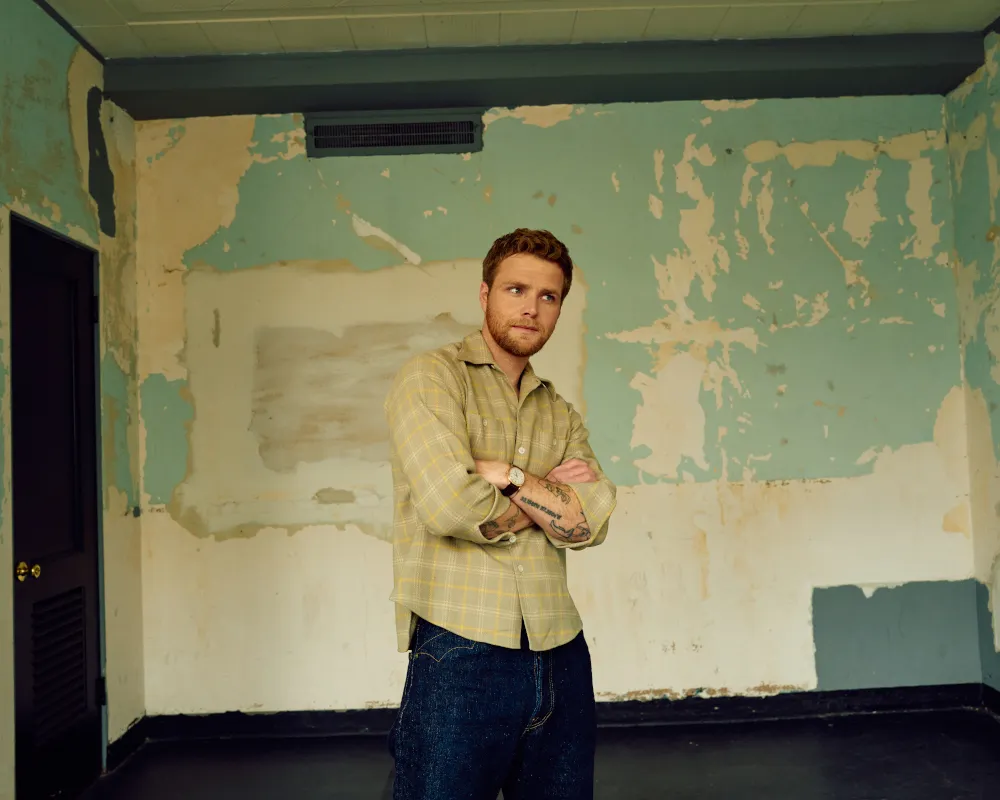
AS: This album does take you on a ride, but was that the plan when you set out to create it?
AW: Fuck yeah. My biggest thing, and the reason why I make music—and I’m not saying bullshit on this—is that the biggest reason I got into music was to give people an outlet that I didn’t have when I was going through all these things. I write music that helps people get through the loss of their parents, a breakup, and falling in love. The type of music I make encapsulates that feeling, instead of running away from it. I think that’s important.
AS: There’s a song on the album called “Only Thing Left.” There is a line that goes I’m not out of love / just out of fight. That’s such a great lyric.
AW: Thank you. I just feel like there are a lot of breakup records that are like, “Why’d you do that to me?” I think that in a relationship, and I look at my mom and I a lot, and I think that with the way that my mom and I’s relationship ended, I wish I definitely mended that, I think that there was an interesting angle in a love song where it’s always, “You did this to me,” but I think that there’s some power in saying, “We both tried. Because we both tried and it didn’t work, it doesn’t mean that we’re wrong or we’re broken. It means that maybe we weren’t meant for each other.”
And I think that’s such a powerful way of looking at it. I think that’s something that not many people attack from that angle. A lot of people are so accusatory, or they’re so, “Why did I do this?” And it’s never, “Maybe we’re fine; we’re not broken. Maybe we’re not fucked up. It’s just not meant to be.”
[RELATED: There Was Nothing “Ordinary” About This Surprise Luke Combs-Alex Warren Duet in Nashville]
AS: The album is called WILDCHILD, a name your late father called you. Why did you want this collection of songs to have that name?
AW: I think that my dad’s been a huge part of my life. I’m a musician because of him. I write music because of them. I don’t think that I’d have any of this without them, and their passing. All this happening, and everything happening in my life kind of just feels like they’re watching over me. And I feel like my relationship with my parents is somehow stronger than it’s ever been. My dad left me these videos, and all my siblings; he talks to us in them. It’s sad because, growing up, you’d watch him and be like, “Oh, my dad was so kind to me as a kid.” And then you start to realize that he knew he was dying; he had terminal cancer.
So as he’s saying these things, he’s talking to me, but I’m all the way down there. He’s not talking to me. He’s talking to me as I’m watching this. He knows I’m going to watch this when I’m 20 years old. And so it’s really fucked up, because it’s almost like a plot twist in a movie, but we were watching this one day, and you start to freak out, because you’re realizing that he’s telling you, 20 years from now, to the camera, but he’s pointing it at younger me, and he’s giving you life lessons and saying, “I love you.”

It’s sad, because you’re watching someone’s last message. It’s really hard to watch. And so when we were doing that, we incorporated that into this album, because this album is me, and I think that I read my dad’s letter, and I realized I had the same handwriting as him. I’m like, “My dad died when I was nine. How am I supposed to know how he wrote, and how would I do that?” I’m reading the letters he’s writing to his friends, because his friends would come over and show me these letters that he wrote, and it’d be the same vernacular. I say the same words as him.
I’m like, “That’s weird, because I don’t remember how he sounds.” Everyone’s like, “You sound like your dad. When you smile, you look like him.” I think that for me, the things that my dad did, and the way that he set up my life, and the person I am today is because of him. So I think it’s only right that, because I’m in a place in my life where I’m ready to have kids, and I’m ready to start my life in a different way, I think it’s only right to almost kind of be like, “This is me, and I am what my dad made me, and I am wildchild.”
AS: On the song “WILDCHILD,” you have your dad’s voice saying, “Are you having fun, Alex?” We’ll, are you having fun, Alex?
AW: The best time of my life. I think I spent a lot of my life asking a lot of questions about why and where I was in my life. I wasn’t necessarily happy, and the last two years of my life—three years of my life—I’ve been the happiest in my life.
AS: John Mayer plays on this song. Talk about why you chose John Mayer to play on “WILDCHILD.”
AW: My dad, before he passed, my dad loved music. So whenever we’d get in his car, he’d throw on Rascal Flatts or whatever. But the one album he always went back to was Room for Squares by John Mayer, and he was obsessed with John Mayer. And so when we wrote “WILDCHILD,” we put a minute and a half guitar solo at the end, and I had DM’d John, and I said, “John, respectfully, you’re holding up my album. It’s not coming out unless you do this.” And he was like, “Okay, cool. I’d love to.” And so he was obsessed, and he did it. And he also helped, obviously, make the record much better, too.
AS: “WILDCHILD” is written from your father’s perspective, talking to you. Was that hard for you to write?
AW: Grief is a thing that happens in stages, and I think that attacking that at every stage is important. The one thing I never got to really hear from my dad… All of his friends come to my shows. You have people who went to college with him. You have people who, after college, were close with him, which is really exciting for me to get to know stories.
His brother comes, and I always hear, “Your dad would be buying out this row, and he’d be having all these people get merch, and he’d be so excited. He’d be so loud. He’d be cheering so loud.” It’s just so cool to kind of get the idea like, “Oh, cool. I’m just like him.” And so when we wrote Wildchild, it was almost like, based on everything I’ve heard, you’d be pretty stoked right now,” and I wanted to write that.
AS: Do you think finishing this album and putting it out closes a chapter for you, or does it just open it up for you to continue?
AW: Wow. I haven’t thought about that. I have no idea. That’s something I’ll confront when I go write the next one. I don’t think it closes any chapter. If it’s at the stage of writing about grief, never, because I think that’s a never-ending stage. I definitely think sonically it allows me to figure out what I want to do. I want to see what everyone thinks about it.
AS: What message do you want people to take with them after listening to WILDCHILD, from top to bottom, all 12 songs (and one interlude)?
AW: I haven’t even thought about that. To me, with this record specifically, I hope that when people listen to it, because people are going to listen to it and be like, “Oh, I wonder if he did it again,” or there’s going to be people who listen to it who are going to just listen to it to just see if it’s good. I think that I often go back to those people, because I know the people who already listen to my music are going to walk away going, “Oh, this song helped me with this,” or whatever.
But I think that for the people who may have just been listening to understand it a little bit more, I hope that when they do the first listen, and let’s say they go, “Nah, not for me, whatever.” I’m like, “Okay, go. Remember that feeling.” And I hope one day, when maybe they go through something that one of these songs could help them with, they go back to it. I hope that that’s maybe something that might help them.
Photos by Jack Dytrych
The post How Grief, Love, Loss and His Father’s Final Messages Shaped Alex Warren’s Album ‘WILDCHILD’ —”My Dad’s Been a Huge Part of My Life” appeared first on American Songwriter.
Author: Lisa Konicki
« 3 Rock Songs From the 1980s That Chill Me to My Core With Every Listen