


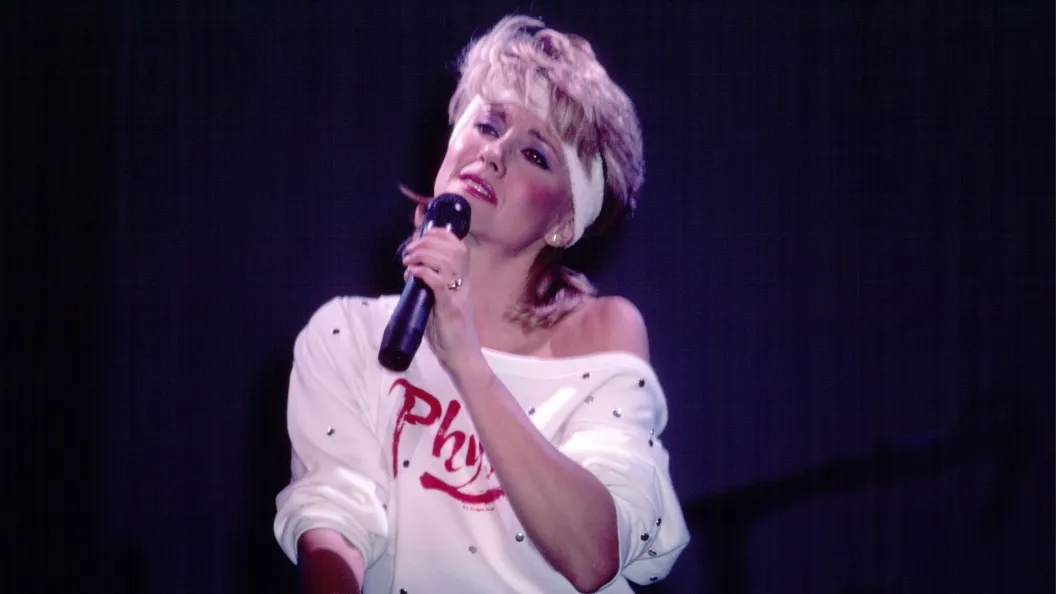
On this day (August 8) in 2022, singer-actress Olivia Newton-John died at her home in the Santa Ynez Valley of California at age 73. The “Physical” singer had battled breast cancer off and on since 1992, with the disease returning for a third time in May 2017.
While known for soft country-pop crossover hits like “Have You Never Been Mellow”, “Physical”, and “Xanadu”, Newton-John is perhaps best remembered as Sandy Olsson, the girl-next-door to John Travolta’s greaser Danny Zuko in the 1978 musical film Grease.
The year’s highest-grossing film, the Grease soundtrack also spawned the number-one duet “You’re the One I Want”, sung by the two headliners.
Following the death of his co-star, Travolta wrote, “My dearest Olivia, you made all of our lives so much better. Your impact was incredible. I love you so much. We will see you down the road and we will all be together again. Yours from the moment I saw you and forever! Your Danny, your John!”
About Olivia Newton-John
Born in Cambridge, England, on Sept. 26, 1948, Olivia Newton-John was five years old when her family immigrated to Melbourne, Australia.
At age 14, she and three classmates formed an all-girl group called Sol Four. The group eventually disbanded, and Newton-John entered an Australian TV talent contest. She won the grand prize of a trip to London, England.
Initially, she struggled to find her footing upon arriving in London in 1964. Two years later, her first single failed to reach the charts.
When Australian singer Pat Carroll also moved to London, the two women formed the duo Pat and Olivia, performing in nightclubs across Europe.
Finding Success in the U.S.
Olivia Newton-John’s musical breakthrough in the U.S. came in 1973 with the country-influenced single “Let Me Be There”, the title track to her third studio album.
The song peaked at number six on the Billboard pop chart and number seven on the country chart. It also won her a Grammy Award for Best Female Country Vocalist.
Newton-John’s success continued with “If You Love Me (Let Me Know)”; “I Honestly Love You”; “Have You Never Been Mellow”; and “Please Mr. Please”.
In 1975, the Country Music Association named her as its Female Vocalist of the Year, promoting several members of the organization to quit and form the short-lived Association of Country Entertainers (ACE) in protest.
A certain segment of Nashville purists weren’t terribly keen on someone from across the pond singing country music, although Newton-John claimed she knew nothing of the backlash.
“I was travelling and touring, and I heard about it after, and heard that Dolly [Parton] and Loretta [Lynn] had backed me up, so I had great support,” she said.
A Career Pivot
Much like her character in Grease, Olivia Newton-John underwent a transformation from wholesome girl-next-door to leather-clad “bad girl.”
In 1980, she returned to the silver screen alongside Gene Kelly in the musical film Xanadu. While Xanadu underperformed at the box office, its soundtrack earned a double Platinum certification and landed five top 20 singles on the Billboard Hot 100.
One of those songs, “Magic”, gave Newton-John the biggest pop hit of her career to that point, spending four weeks at number one.
The following year, she released the double platinum album Physical. For 10 weeks, the title track held the number-one spot on the pop chart, tying a record set by Debby Boone’s “You Light Up My Life”.
Continuing to release music throughout the 1990s, 2000s, and 2010s, Olivia Newton-John also advocated for breast cancer research, along with environmental and animal rights causes.
[RELATED: Did You Know? Olivia Newton-John’s 1981 Hit “Physical” was Meant for Someone Else]
More than 50 years after her debut, she remains the highest-selling female Australian recording artist of all time.
Featured image by Gary Gershoff/Getty Images
The post Four Years Ago Today, We Said Goodbye to the 80s Pop-Country Crossover Queen Who Starred in One of the Most Successful Musicals of All Time appeared first on American Songwriter.
Go To Source | Author: Erinn Callahan
« 4 Pop Icons From the 80s You Probably Recognize (Even if You Can’t Name Them)
3 Rock Songs From 1976 That Still Sound Like Classics Today »