


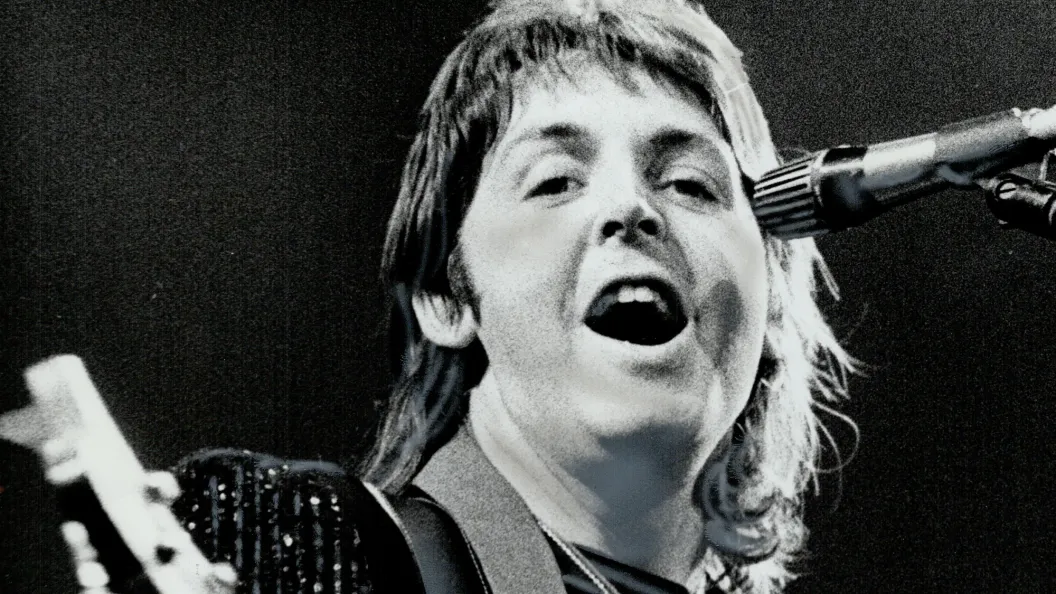
Even when it came to urban legends, The Beatles took it to another level. Or at least their fans did when it came to the whole “Paul Is Dead” craze. That’s the myth that claimed that Paul McCartney perished in a 1966 car accident and was replaced by a lookalike.
The Beatles supposedly left hints to this secret in their music. But as these four songs and their “clues” prove, the whole scenario required some mammoth leaps in logic among the true believers.
“A Day In The Life”
According to the Paul Is Dead truthers, The Beatles left clues all over the packaging of their 1967 masterpiece Sgt. Pepper’s Lonely Hearts Club Band. And these folks would have you believe that John Lennon took some time from “A Day In The Life”, the closing track and one of the finest songs ever written, to leave a trail of breadcrumbs. The lines in question are “He blew his mind out in a car/He didn’t notice that the lights had changed.” People took this as a reference to McCartney’s supposed vehicular demise. They were only half-right. Lennon was indeed inspired by a car crash death to write the lines. But he was referring to a fellow named Tara Browne. John saw the item about Browne’s death in a newspaper and worked it into the lyrics.
“I Am The Walrus”
“I Am The Walrus”, in a way, nods to the kind of overthinking that fans were doing when they concocted the Paul Is Dead story. John Lennon was getting a bit tired of his listeners looking for profound meanings that wildly diverged from what he intended when he wrote the songs. To prove his point, he purposely wrote “I Am The Walrus” in a way that it would send listeners off on a wild goose chase, knowing all along that the lyrics were mostly free-associative gibberish. As for the clue, that comes during the fade-out, when you can hear a voice asking, “Is he dead?” In the experimental spirit of the song, Lennon included a brief clip of a radio play of Shakespeare’s King Lear. The line in question is taken straight from the text.
“Glass Onion”
“Glass Onion” continued Lennon’s strategy of baffling his fans with lyrics that are meant to deceive and obfuscate. The song includes brief shout-outs to several Beatles songs, including some that Lennon himself didn’t even write. He also takes us back to “I Am The Walrus” with the lines, “Well, here’s another clue for you all/The Walrus was Paul.” The Paul Is Dead believers insisted that, in some ancient societies, the walrus is a symbol of death, although there’s not a ton of evidence for that. In reality, Lennon was having a bit of an in-joke. He felt that he had misinterpreted Lewis Carroll’s The Walrus And The Carpenter when writing “I Am The Walrus”. This was his sneaky attempt to correct that.
“Don’t Pass Me By”
Would Ringo Starr dare to leave us a clue to Paul McCartney’s hidden death as well? Some would certainly have you believe it. In “Don’t Pass Me By”, Starr’s first-ever solo writing credit with the group, there’s the line, “You were in a car crash and you lost your hair.” The somewhat grisly details of McCartney’s alleged death insisted that he was beheaded in the car crash. But the problem with considering Starr’s throwaway line to be a clue is timing. Although The Beatles didn’t record “Don’t Pass Me By” until The White Album in 1968, Starr started writing it much earlier, bringing it to the band by 1964. In other words, he would have needed to psychically intuit McCartney’s passing for the line to have been a clue.
Photo by Doug Griffin/Toronto Star via Getty Images
The post 4 of the Biggest Stretches Among the “Paul Is Dead” Musical Clues appeared first on American Songwriter.
Author: Jim Beviglia
« The 5 Most Underrated Opening Tracks on 1970s Classic Rock Albums
3 Early Lonestar Hits That Would Still Work on Country Radio Today »