


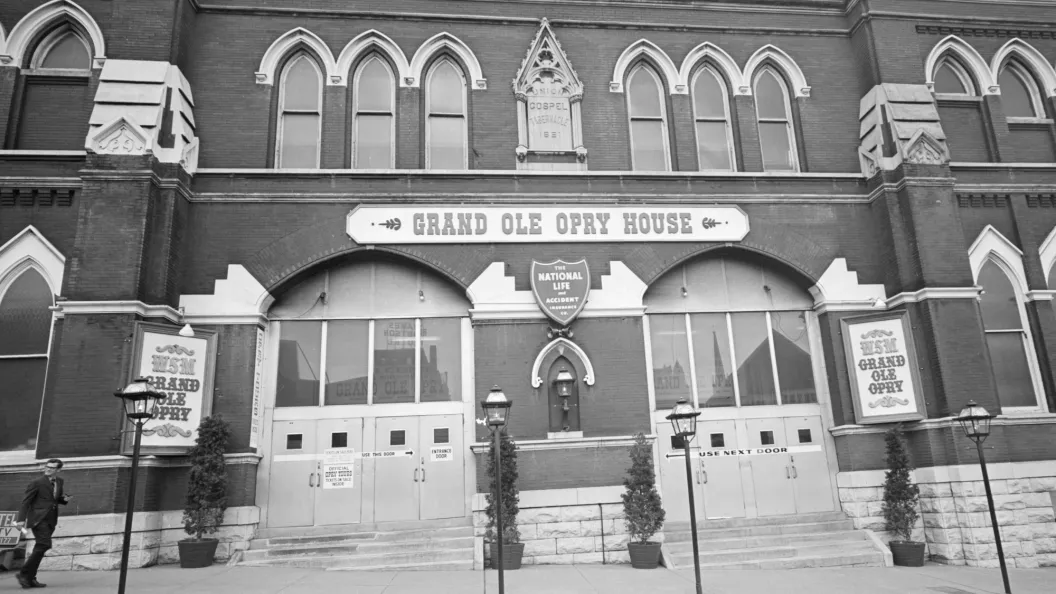
On this day (July 2) in 1982, DeFord Bailey died of heart and kidney failure in Nashville, Tennessee, at the age of 82. He was one of the most influential harmonica players of the last century. He was also the first Black musician to perform on the Grand Ole Opry. Moreover, he was one of the lauded program’s first stars.
Bailey grew up in a musical family in rural Tennessee. His family played what he referred to as “Black hillbilly music,” a combination of the folk music performed by Black and white musicians throughout the Appalachian region. When he was 18, the already-skilled harmonica player moved to Nashville. There, he worked odd jobs and continued to hone his craft and broaden his musical horizons.
According to the Country Music Hall of Fame, Bailey spent his first years in Music City learning to play popular jazz, blues, and pop songs. In doing so, he became a living link between the old-time music he was raised on and the music that populated the airwaves and record store shelves.
DeFord Bailey Makes His Grand Ole Opry Debut
In 1925, DeFord Bailey met Fred Exum, who quickly became a fan of his harmonica playing. When he launched his radio station, WDAD, in September of that year, Bailey became a featured performer. While performing on the station, he met Dr. Humphrey Bate, who had recently started performing on the WSM Barn Dance. Eventually, Bate convinced Bailey to come perform on WSM.
Together, they convinced station manager George D. Hay to let Bailey play without an audition. By the summer of 1926, Hay had dubbed him the “Harmonica Wizard,” and he was making regular appearances on the show. Bailey’s “Pan American Blues” was the first song performed on the show after Hay changed its name to the Grand Ole Opry.
Bailey’s appearances on the Opry made him one of country music’s first stars. In 1928, he became the first artist to record in Nashville. He recorded eight songs for RCA Victor. Because he was popular with the Grand Ole Opry audience and Black, they marketed his music as both “race records” and “hillbilly records,” maximizing sales. He also toured with other stars of the radio show, including Uncle Dave Macon, Roy Acuff, and Bill Monroe.
Despite being popular with the white crowds the Opry road shows drew, it was still the 1920s in the South. As a result, Bailey still had trouble finding places to eat or hotels that would let him rent a room because of Jim Crow laws.
The End of an Era
DeFord Bailey’s career came to an abrupt end in 1941 due to circumstances far outside his control. According to Radio World, ASCAP licensed most of the popular music performed on the radio, charging stations five percent of their advertising revenue to broadcast the material. In 1940, ASCAP announced that the fee was going up to 15 percent.
On January 1, 1941, radio stations across the United States boycotted ASCAP and started playing only public domain music and songs licensed by BMI. Unfortunately, the bulk of Bailey’s music, including his most popular songs, was licensed by ASCAP. As a result, he could no longer perform them on the radio. This caused tension between him and WSM staff. In the end, WSM fired Bailey.
According to The Tennessean, when he was fired, Bailey walked away from his music career. He opened a shoeshine stand and rented rooms in his house to make ends meet.
DeFord Bailey rarely performed publicly after being fired by WSM. He only returned to the Grand Ole Opry a handful of times. For instance, he performed in 1974, when the show moved from the Ryman Auditorium to the Grand Ole Opry House. He also appeared on the annual Old Timers shows. Additionally, Bailey performed in December 1974 to celebrate his 75th birthday. His final appearance on the program was in April 1982, just months before he passed away.
Featured Image by Bettmann/Getty Images
The post We Lost the “Harmonica Wizard” Who Was the First Black Star of the Grand Ole Opry 44 Years Ago Today appeared first on American Songwriter.
Go To Source | Author: Clayton Edwards
« 3 Rock Songs From the 1980s That Will Get All Your Friends Dancing
3 Tracks From the 1990s That Still Sound Futuristic in Their Own Ways »