


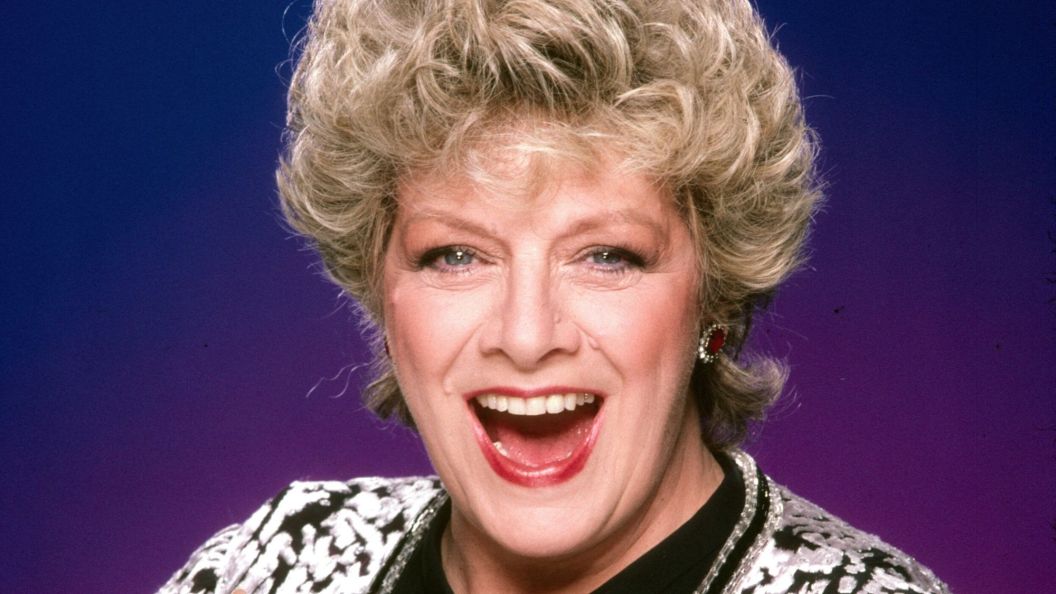
Achieving pop icon status in the 1950s with international hits like “Mambo Italiano” and “This Ole House”, Rosemary Clooney would also go on to star in films like the 1954 holiday classic White Christmas. That hot streak cooled off in the 1960s largely due to Clooney’s struggles with bipolar disorder and substance use. Fortunately, she saw her career revitalized in the 1970s and went on to enjoy a successful second act.
Rosemary Clooney died of complications from lung cancer on this day (June 29) in 2002 at her home in Beverly Hills, California. She was 74 years old. Today, we’re reflecting on her life and legacy.
She Started Out Singing With Her Sister
Born May 23, 1928, in Maysville, Kentucky, Rosemary Clooney’s upbringing wasn’t exactly stable.
Fortunately, singing would prove to be her ticket out after she borrowed money to audition for singing positions on a Cincinnati radio station with her younger sister, Betty.
They won the spot, performing together as the Clooney Sisters until big bandleader Tony Pastor invited them to join his orchestra.
The duo cut 14 sides with Pastor’s band before Betty decided to leave in 1948. Rosemary stayed another year before landing a solo contract with Columbia Records in 1949.
Rosemary Clooney Initially Refused to Record Her First Solo Hit
For two years, Rosemary Clooney recorded with Columbia and appeared on the CBS radio and television versions of Songs for Sale.
In 1951, producer Mitch Miller offered her a song titled “Come on-a My House,” by Armenian-American author William Saroyan. She hated it.
“I think it was a musically snobbish time in my life… I hated the whole idea, and my first impression was, what a cheap way to get people’s attention,” Clooney wrote in her memoirs.
At first, she refused to record the song, relenting only after Miller threatened to fire her. But “Come On-a My House” was a massive hit, spending six weeks at number one on the Billboard charts.
It was the first of many, as Clooney sent 16 songs to the Billboard charts between 1951 and 1956, including a pair of number-one hits in 1954—”Hey There” and “This Ole House”.
Her fame only continued to soar when she starred in the 1954 film White Christmas with Bing Crobsy and Danny Kaye.
Her Decline and Comeback
By the ’60s, however, rock-and-roll had seized the spotlight from pop music. Rosemary Clooney continued recording until 1968, when years of personal turmoil—as well as struggles with undiagnosed bipolar disorder and prescription drug use—took their toll.
Suffering a nervous breakdown onstage in 1968, Clooney withdrew from the spotlight to spend four years under psychiatric care.
Returning to the stage in 1972, her musical career found new life three years later after White Christmas co-star Bing Crosby asked her to join him onstage at the Los Angels Music Center for a concert commemorating his 50 years in entertainment.
She agreed, and the show was such a hit that they also took it to Chicago, New York, and London. She landed a new record contract, continuing to make music until her death in 2002.
In 1994, she also earned a Primetime Emmy nomination for a guest role on ER with nephew George Clooney.
Featured image by Harry Langdon/Getty Images
The post 24 Years Ago Today, We Said Goodbye to the Singer and Actress Who Experienced a Career Resurgence Thanks To Bing Crosby appeared first on American Songwriter.
Author: Erinn Callahan
« 3 Alternative Rock Ballads From the 2000s That Feel Like Reading Someone’s Diary
3 Beatles Songs That Are Way Sadder Once You Know Their Backstories »