


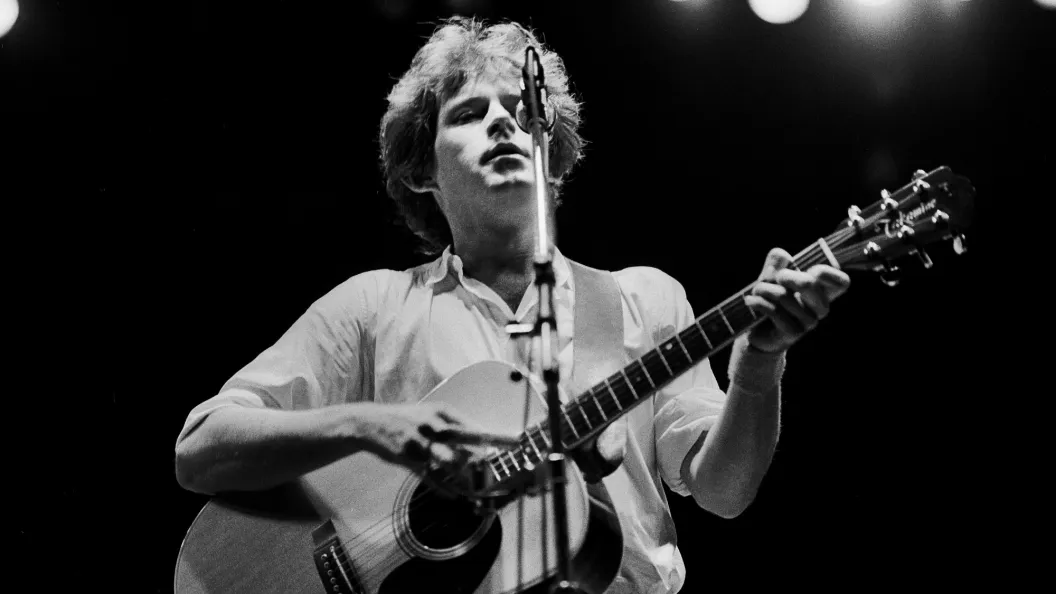
Considering the popularity of Eagles throughout the 70s, many fans and music industry experts were watching closely to see what the individual members would do upon the band’s breakup. Most of the scrutiny centered on Don Henley, who was as close as the band had to a frontman, even from behind the drum kit.
Henley did indeed emerge in 1982 with I Can’t Stand Still, his solo debut. While not a runaway success, it helped establish a fresh musical identity separate from his former band.
Suddenly Solo
Despite the rancor that enveloped Eagles during their final tour together, Don Henley was still surprised by the phone call he received from his former writing partner, Glenn Frey, in 1980. After making some small talk, Frey told Henley he was planning a solo album. If there were any doubt, this removed it. Eagles were done.
Henley knew then that it was time to start thinking about his own solo career. While it’s conceivable that he could have gone the singer-songwriter route, his old competitiveness spurred him to try to make a splash on the pop music scene.
But he knew he wouldn’t be able to make that happen alone. Henley’s musical chops were mostly limited to drums and piano. He wanted to find collaborators who could help him express himself in a musical sense. Danny Kortchmar turned out to be just what he needed.
‘Still’ Waters
Kortchmar, aka “Kootch,” had established himself as one of the leading session players on the West Coast. His work adorned classic records by folks like Linda Ronstadt, Jackson Browne, and Warren Zevon. But Henley turned to him for more than just his instrumental expertise.
Kootch ended up co-writing six of the ten songs on I Can’t Stand Still, and he was the sole writer on “You Better Hang Up”. Henley also called on some world-class musicians to help him out. In addition to Kortchmar’s fellow members of The Section, guests ranged from Garth Hudson of The Band to Benmont Tench of Tom Petty’s Heartbreakers, from Warren Zevon to R&B legend Bill Withers.
His old Eagles collaborator JD Souther also co-wrote a pair of tunes and shows up on backing vocals throughout the album. Henley did err a bit by choosing “Johnny Can’t Read” as the first single. That song failed to reach the Top 40. Luckily, he still had an ace up his sleeve.
“Laundry” List
Henley felt frustrated with how he’d been treated by the media in recent years. He channeled all that into “Dirty Laundry”. Playing the caustic lyrics off a kind of modern blues arrangement, with guitar solos by former bandmate Joe Walsh and Toto’s Steve Lukather, the song rolled into the Top 5.
That was the only big hit off I Can’t Stand Still. The album works best when Henley is luxuriating in countryish ballads like “Talking To The Moon” and “Long Way Home”. He also scores on the title track, with its prickly New Wave textures.
I Can’t Stand Still fell short of being a smash. But Henley certainly felt emboldened by the progress he’d made on the album. Two years later, he returned with his solo masterpiece, Building The Perfect Beast. That album returned him to the rarefied commercial air once occupied by his former band.
(Photo by Paul Natkin/Getty Images)
The post Remembering When Don Henley Went Solo in 1982 and Shocked the World appeared first on American Songwriter.
Author: Jim Beviglia
« 46 Years Ago Today, the Show That Foreshadowed the End of Led Zeppelin Took Place in Germany
3 One-Hit Wonders From the 2000s With Melodies That Still Echo Decades Later »